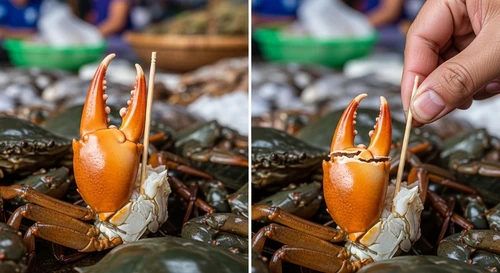
1 The Mystique of Ly Son Stone Crab
" Off the coast of Quang Ngai province lies Ly Son Island, a volcanic gem. Here, the very earth influences the sea, and that influence imbues the local stone crab with a character found nowhere else. "
2 Where the Wild Things Are: Geographic & Culinary Roots
Ly Son Island, known for its garlic and unique terroir, is a realm apart. Its volcanic soil and surrounding marine currents create a distinct ecosystem. The stone crab, a creature of habit and strength, thrives here. Unlike the soft-shell crabs of the Mekong Delta’s mangroves, or the famed mud crabs of Ca Mau, the Ly Son stone crab is a testament to the ruggedness of its home.
The "stone" in its name isn't hyperbole; the shell is incredibly hard, a formidable defense mechanism forged by a life spent navigating rocky seabeds. This shell is not just a shield; it’s a testament to the crab’s life cycle. It means the meat inside has been protected, its juices concentrated, and its texture developed over time.

The dramatic volcanic shores of Ly Son Island, Vietnam.

A typical rocky habitat where stone crabs forage.
This crab is not a common sight in the bustling floating markets of the Mekong Delta, nor is it typically found in the estuaries further south. Its domain is the rocky coast of Central Vietnam, making it a true regional specialty, a treasure unearthed from a specific corner of the Vietnamese coastline.
3 The Shell Game: Understanding the Crab
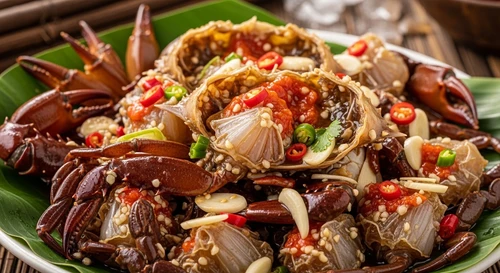
To appreciate the Ly Son stone crab, you must first respect its formidable exterior. This is not a crab you’ll easily crack open with your bare hands. The shell, dense and grey like a weathered rock, is a formidable barrier. But within this fortress lies the reward: meat that is uniquely sweet, satisfyingly crunchy, and delightfully dry – a texture unlike any other crab.
The "dry" quality is key. It means the meat isn't waterlogged. It's pure, concentrated crab essence. This dryness is a hallmark that dictates its preparation. Heavy sauces would be a crime, a desecration of its natural character.

The Prize Within
The stark contrast between the unyielding shell and the delicate, sweet meat inside is what makes this crab so sought after. It requires a specific technique to access its treasure.
4 The Art of Roasting with Coarse Salt
Forget steaming, boiling, or pan-frying. The Ly Son stone crab is best prepared using a method that respects its toughness and enhances its natural sweetness: roasting with coarse salt. This isn't about masking flavors; it's about a primal, elemental cooking process.
Imagine a heavy-duty pan, perhaps a wok or a cast-iron skillet, generously filled with coarse sea salt. This salt acts as a natural oven, providing dry, even heat. The crabs are then nestled into this salty bed. The heat envelops them, slowly coaxing the meat to perfection. The coarse salt provides a subtle mineral crust without overpowering the crab's inherent delicate sweetness.
The Salt Bed
Coarse sea salt heats evenly and imparts a clean salinity.
Dry Heat
Roasting in salt creates a dry heat environment, crucial for the crab's texture.
The Transformation
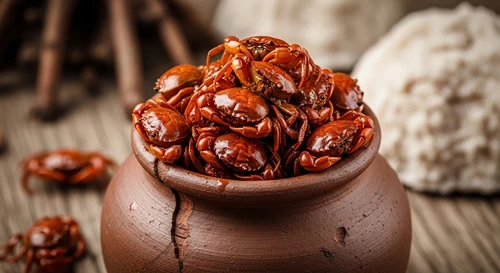
The shell turns a deep, inviting red, signaling the meat inside is cooked to its peak.
5 Sea Foam Dates: A Surprising Companion
The "sea foam dates" mentioned in the dish's name are not what you might expect. They are not actual dates. Rather, they refer to the delicate, almost foamy condensation that forms on the crab's shell during the high-heat roasting process. This "sea foam" is a visual cue, an indicator of perfect, rapid cooking. It’s the moisture released by the crab itself, intensified by the salt roast, creating a fleeting, ephemeral steam.
This detail speaks volumes about the dish's philosophy. It's about observing the subtle signs, understanding the cooking process on an elemental level, and appreciating the natural beauty of the ingredients. The "sea foam" is as much a part of the experience as the crab's sweet flesh.
The name itself evokes the ocean's breath and the island's bounty – a poetic description of a simple yet profound culinary act.
6 Serving and Savoring the Delicacy
Accessing the meat requires a tool, perhaps a small mallet or the back of a heavy spoon to gently but firmly tap the shell. The goal is to crack, not crush, preserving the integrity of the meat within.
The dipping sauce is almost an afterthought, a whisper rather than a shout. A simple blend of fresh lime juice, a pinch of fine sea salt, and a touch of chili is often all that's needed to complement, not compete with, the crab's natural sweetness. Some might even prefer it *au naturel*, letting the pure flavor of the stone crab sing.

The roasted stone crab, cracked open, revealing its treasure.

A minimalist dip: lime, salt, and perhaps a hint of chili.
🌊 A World Away from the Delta 🦀
While the Mekong Delta is a paradise for crustaceans – think the luscious roe crabs of Ca Mau (like our Ca Mau Roe Mud Crab) or the sought-after soft-shell crabs from molting mangroves, often referred to as butter crabs (similar to the concept of the Soft-Shell Butter Crab) – the Ly Son stone crab offers a profoundly different experience.
The Delta's crabs often lean towards moist, rich meat and creamy roe, thriving in muddy, brackish waters. The stone crab, by contrast, is a product of the open, rocky sea. Its dryness, crunchiness, and concentrated sweetness are born from a life of struggle and resilience, a stark contrast to the abundant, often sweeter environment of the southern river systems.
Understanding these differences highlights the incredible diversity of Vietnam's seafood tapestry, from the southern mangroves to the central coast's volcanic islands.
8 The Lure of Rarity
This is not a crab found in every market. Its limited geographic range and challenging harvesting make it a rare find, a true delicacy for those in the know. The very act of seeking out and tasting Ly Son stone crab is an adventure, a culinary pilgrimage. It's a reminder that the world's most extraordinary flavors often lie in its most protected corners.
So, the next time you find yourself traversing the culinary landscape of Vietnam, venture beyond the well-trodden paths. Seek out the rugged beauty of Ly Son Island, and if fortune smiles upon you, seek the humble yet magnificent Sea Stone Crab, roasted with coarse salt. It’s a taste of the sea, the earth, and a testament to nature’s incredible artistry.