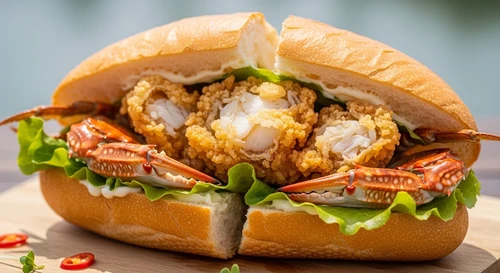
" The Mekong Delta, a labyrinth of waterways, is a treasure trove of the freshest seafood imaginable. From the bustling floating markets of Can Tho to the coastal villages of Ca Mau, life here revolves around the bounty of the rivers and the sea. But where there's abundance, there's always a shadow. "
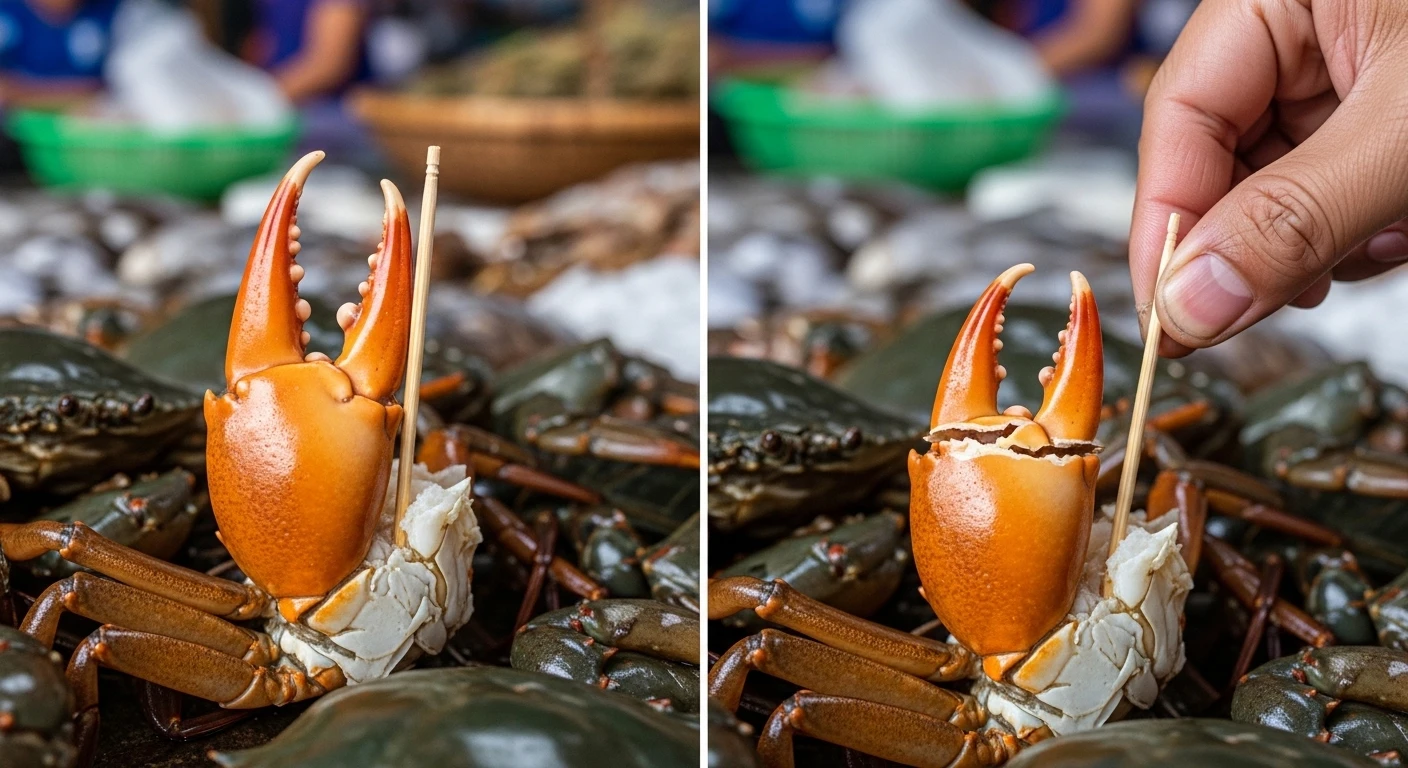
📸 The tell-tale sign: A hidden toothpick supporting a detached claw.
1 The Anatomy of a Scam: It's All in the Claws
The crab, especially the majestic mud crab from Ca Mau, is prized not just for its sweet, succulent meat but for its substantial claws. These are often the most visually appealing and valuable parts. When a seller tries to pass off a crab with a detached or broken claw as whole, they're not just being dishonest; they're fundamentally altering the product's value.
The Evidence
Scrutinize the connection points. If a claw looks slightly askew, or if you can wiggle it with barely any pressure, there's a good chance it's been reattached. The seam where the claw meets the body might look unnaturally sealed or slightly raised.
The Tool of Deception
The bamboo toothpick, a common item in Vietnamese kitchens and markets, becomes the agent of this fraud. Small, discreet, and easily inserted, it can provide just enough support to hold a broken claw in place until the sale is made.
This isn't about a minor cosmetic flaw; it's about active deception. A crab that has lost a claw naturally has a poorly healed or visibly broken joint. A claw attached with a toothpick is an attempt to hide that damage.
2 The Prize of Ca Mau: Why This Scam Persists
Ca Mau's Golden Claws
The mud crabs (Scylla serrata) from the mangrove-rich coastal regions of Ca Mau province are legendary. Known for their dense, sweet meat and substantial, meaty claws, they command premium prices. Both male crabs, prized for their meat, and female crabs, valued for their rich roe, are highly sought after.
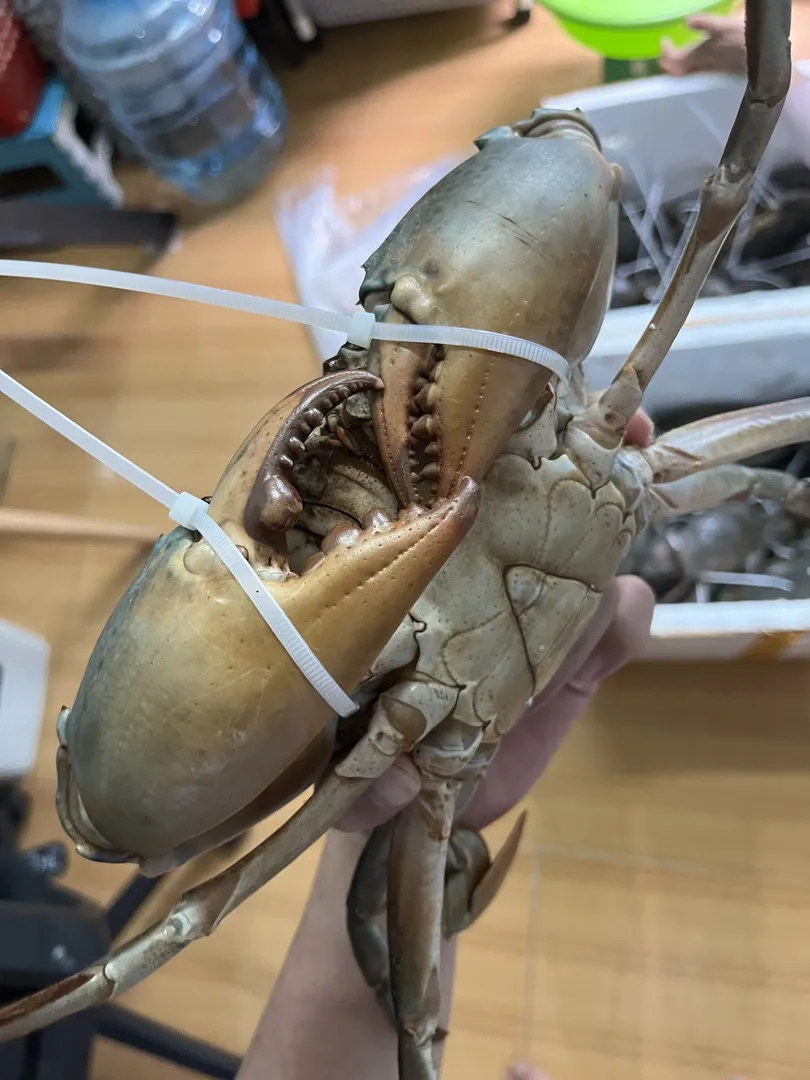
Heritage Ingredient
Ca Mau Jumbo Mud Crab
Ca Mau Jumbo Mud Crab
A large male mud crab prized for dense, sweet meat and thick claws, commonly used in steamed crab and grilled crab dishes across the Mekong Delta.
An icon of coastal culinary heritage, featuring firm, sweet meat that captures the raw power and freshness of Ca Mau's tides.
The Value Proposition
A single large claw from a prime Ca Mau crab can be worth as much as a smaller crab's entire body. Sellers, particularly those dealing in less than fresh or slightly damaged stock, are tempted to use quick fixes like toothpicks to make their wares appear more valuable and complete.
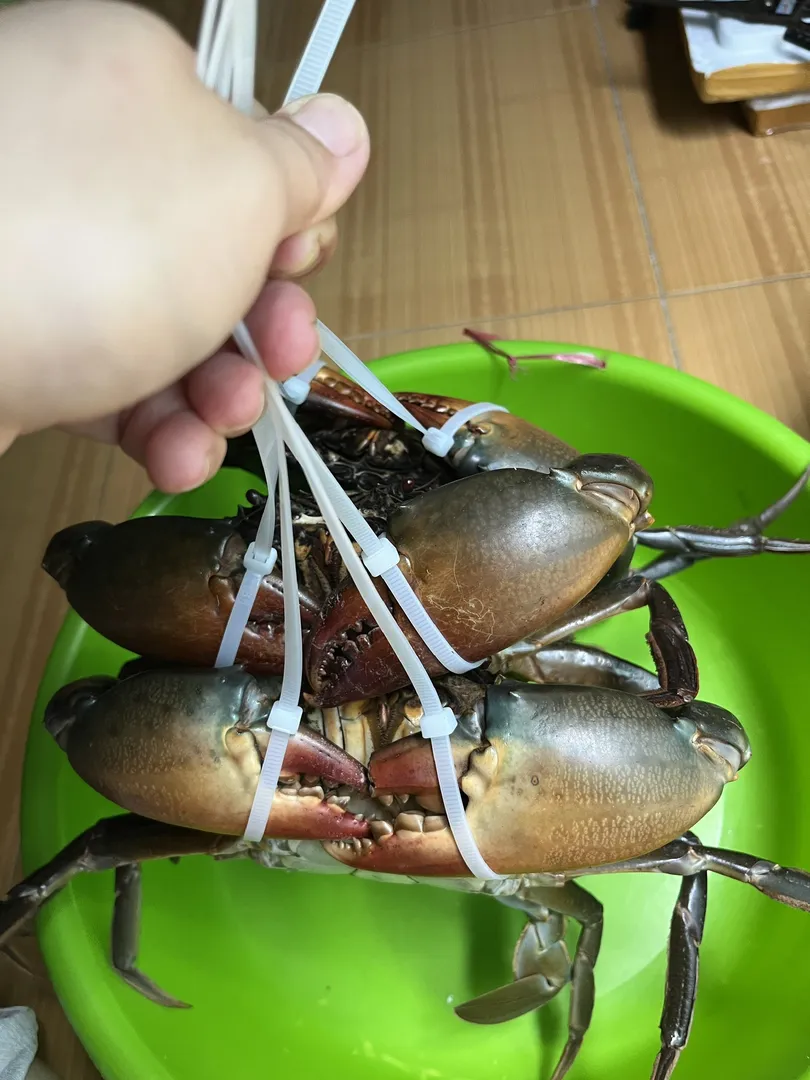
Heritage Ingredient
Giant Ca Mau Mud Crab
Giant Ca Mau Mud Crab
A larger export-grade mud crab with dramatic claws and thick meat, often used to illustrate oversized crab categories in Vietnamese seafood markets.
A titan of the ocean, offering colossal claws filled with muscular, succulent meat that elevates every feast into a royal experience.
3 Your Buyer's Toolkit: A Practical Guide
The Gentle Wobble Test
If the crab is alive and you're at a market where handling is permitted, gently prod the base of the claws. A truly attached claw will have a firm, natural movement. A toothpick-attached claw might feel stiff or detached at its root.
Visual Inspection: The Seam
Look closely at where the claw meets the body. Does it look like a clean break and reattachment? Can you spot the tip of a bamboo skewer? Sometimes a small piece of shell or a discolored area around the joint is also a giveaway.
When in Doubt, Ask or Walk Away
Don't be afraid to ask the vendor directly about any suspicious-looking claws. A confident, honest seller will have nothing to hide. If you feel uneasy, there are plenty of other vendors who value their reputation and offer quality produce.
Beyond the Toothpick: A Question of Trust
This scam, while seemingly minor, erodes trust in the market. For tourists and locals alike, the vibrant wet markets of Vietnam are an essential part of the cultural experience. They should be places of honest trade, where the quality of the produce speaks for itself.
Consumer Rights
As a consumer, you have the right to receive what you pay for. Always be an informed shopper.
Reputation Matters
Vendors who practice such tricks risk damaging their long-term reputation and business.
Regional Integrity
Upholding the integrity of regional specialties like Ca Mau crab ensures the authenticity of Vietnam's culinary heritage.
For more on navigating Vietnamese markets, read our guide on Buying Seafood Like a Local.
Ensuring Freshness and Quality
The toothpick scam is just one aspect of ensuring you get the best seafood. Freshness is paramount, and this is where understanding the provenance and local sourcing becomes key. The best crabs, like those from Ca Mau, are often sold directly from fishing boats or reputable stalls that prioritize live product.
When Shopping in the Mekong Delta:
- Look for Live Specimens: Always prioritize crabs that are actively moving.
- Check the Shell: A healthy crab has a firm, unblemished shell. Dull or pitted shells might indicate illness or age.
- Sniff Test: Fresh seafood should smell of the sea, not of strong ammonia or decay.
- Trust Reputable Vendors: Seek out stalls or markets known for quality and honesty. Ask locals for recommendations.
- Consider the Source: If you're buying specifically Ca Mau crab, inquire about its origin to ensure authenticity.
Empowering the Buyer
Awareness is your greatest weapon against market scams. By understanding common tricks like the bamboo toothpick deception, you not only protect yourself but also contribute to a more transparent and fair trading environment for everyone involved in the vibrant seafood economy of the Mekong Delta.
Be Vigilant
Keep these tips in mind the next time you're selecting crabs, whether in a bustling Vietnamese market or a local fishmonger.
Spread the Word
Share this information with fellow travelers and seafood lovers to help prevent others from falling victim.