" This isn't just soup; it's a memory. A taste of a slower life, where the sun beats down and the rivers are your highways. It's the Mekong Delta in a bowl. "
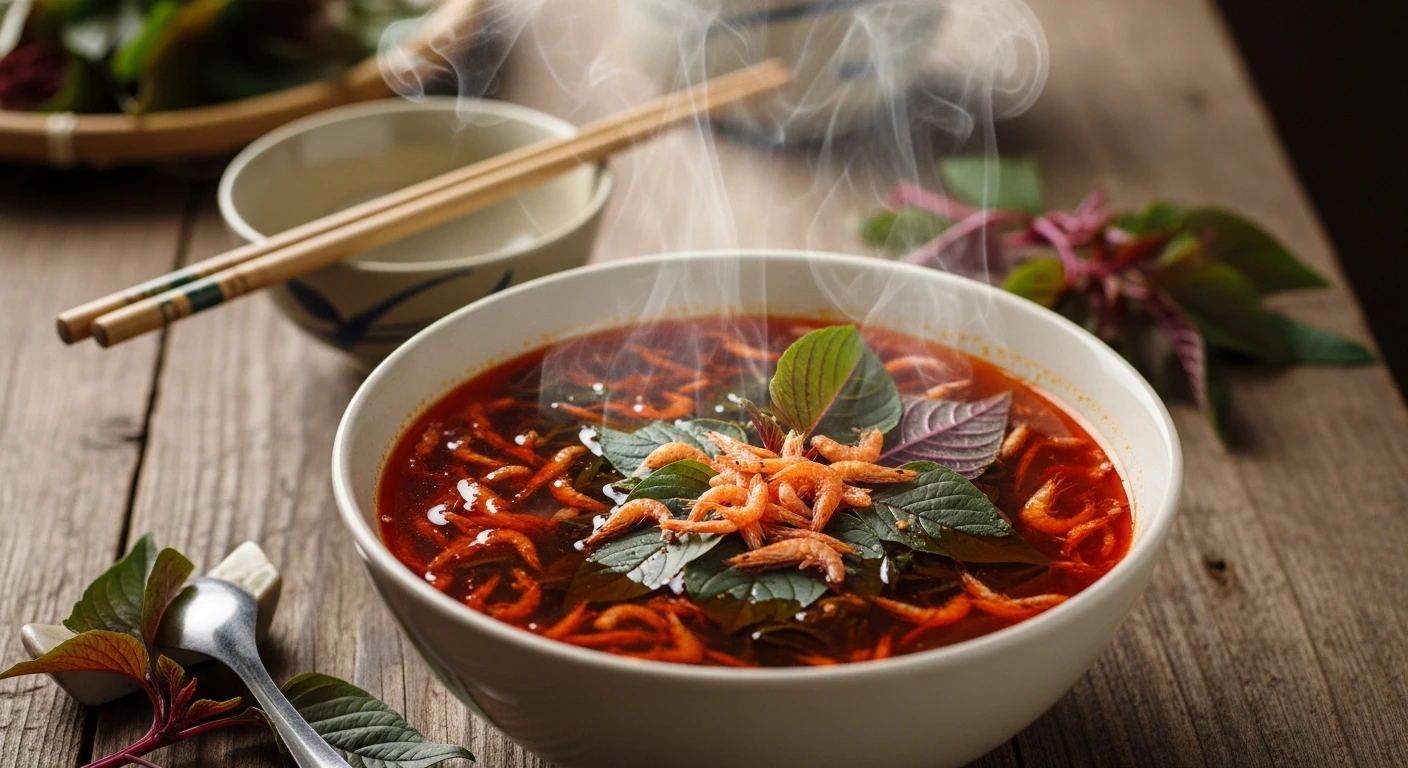
📸 A vibrant bowl of summer comfort.
1 Summer's Embrace: The Delta's Kitchen
When the relentless sun bakes the fertile plains of the Mekong Delta, and the air hangs thick with humidity, the people turn to the rivers and their gardens for relief. This isn't about complex gastronomy; it's about simple, honest ingredients transformed into dishes that cool, refresh, and nourish. Red amaranth, a hardy green that thrives in the heat, and the intensely savory punch of dried shrimp, are two such pillars of this rustic cuisine. Together, they create a soup that is more than just sustenance – it's a comforting, almost nostalgic, experience.
The visual appeal is striking: a broth that's a deep, ruby red, often tinged with the natural blush of the amaranth leaves, studded with the translucent fragments of rehydrated shrimp. It looks as vibrant and alive as the delta landscape itself. Unlike the heavy, complex broths of the north or the central regions, Mekong Delta soups often embrace a lighter, sweeter, and more direct flavor profile. This soup is a testament to that philosophy.
2 The Harmony of Simplicity
Red Amaranth (Rau Dền)
A leafy green that wilts beautifully, imparting a subtle sweetness and its signature red hue. It's abundant in the delta's gardens, a symbol of resilience and summer bounty.
Dried Shrimp (Tôm Khô)
The secret weapon. Small, sun-dried shrimp from the coastal areas like Rach Goc are pounded or crushed. Their concentrated, umami-rich flavor forms the backbone of this broth, lending it a depth that belies its simple appearance. These aren't the large, sweet shrimp; these are the tiny flavor bombs.
Aromatic Foundation
Often just garlic, shallots, and sometimes a whisper of ginger. These are sautéed briefly to release their fragrance before the water is added, creating an aromatic base for the soup.
You might also find variations that include fish sauce for saltiness, a touch of sugar to enhance the natural sweetness, or even small pieces of tender fish or pork if a heartier soup is desired. But the core combination of amaranth and dried shrimp is pure, unadulterated delta comfort.
3 Unlocking the Umami
This is where the magic happens. Simply dropping whole dried shrimp into water won't yield the same result. The key is to break them down. In traditional Mekong kitchens, this would be done with a mortar and pestle, grinding the brittle shrimp into a coarse powder. These days, a small food processor or even a sturdy spice grinder can do the job. The goal is to release as much of the shrimp's inherent flavor and aroma as possible into the cooking liquid.
Why Crush?
- Surface Area: Crushing dramatically increases the surface area, allowing the flavor compounds to leach out rapidly into the broth.
- Texture: It creates small, flavorful bits that meld into the soup, rather than large, chewy pieces.
- Color: The pulverized shrimp contribute to the soup's rich, reddish-orange hue.
Visual Aid
Imagine the sun-drenched coastal fishing villages of Ca Mau or the bustling waterways of Can Tho. The dried shrimp are a product of these environments, harvested and preserved using age-old techniques passed down through generations. Using them in this soup is a direct connection to that heritage.
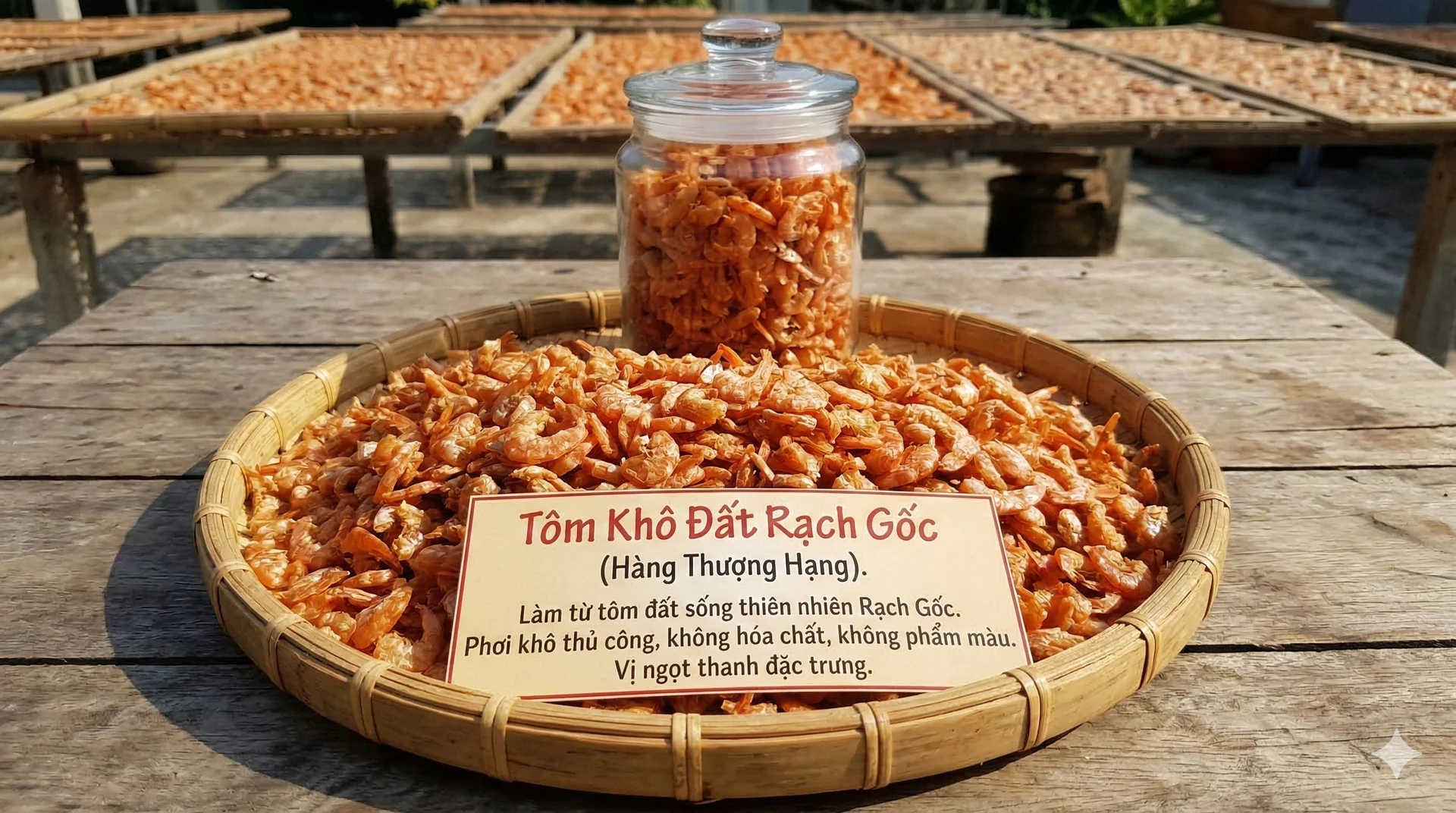
Heritage Ingredient
Sun-Dried Wild Shrimp from Rach Goc
Sun-Dried Wild Shrimp from Rach Goc
Traditional dried shrimp made from small wild shrimp, valued for natural sweetness and commonly used in Vietnamese salads, soups, and festive dishes.
Concentrated sunlight and sea salt in every bite, these crimson gems offer a deep, umami sweetness that whispers tales of Rach Goc's golden shores.
4 Rustic Charm in a Bowl
The beauty of this soup lies in its straightforward preparation. It's the kind of dish you might whip up in a simple Mekong kitchen, using ingredients readily available from your garden or the local floating market.
Prep the Aromatics
Finely mince garlic and shallots. If using ginger, slice it thinly.
Infuse the Oil
Heat a little cooking oil in a pot over medium heat. Sauté the minced garlic and shallots until fragrant and lightly golden. Add the crushed dried shrimp and stir-fry for another minute, allowing their aroma to bloom.
Build the Broth
Pour in enough water or vegetable broth (about 1-1.5 liters for a typical batch) to make a soup. Bring to a boil, then reduce heat and simmer gently for about 10-15 minutes to let the flavors meld.
Add the Greens
Add the washed red amaranth leaves. Cook for just 2-3 minutes until they are wilted and tender, and the soup takes on a beautiful crimson hue. Do not overcook, or the greens will lose their vibrant color and delicate flavor.
Season and Serve
Season the soup with fish sauce and a pinch of sugar to taste. The goal is a balance of savory and subtly sweet. Ladle into bowls immediately.
5 A Taste of the Riversides
This soup is often enjoyed as a light accompaniment to a main meal, or as a comforting standalone dish on a sweltering day. It pairs wonderfully with steamed rice. For a more substantial meal, consider serving it alongside:
Steamed Rice
The perfect canvas for soaking up the flavorful broth. Simple, white rice is all you need.
Grilled Fish
A piece of simply grilled Mekong catfish or snakehead fish, seasoned with chili salt, provides a satisfying contrast.
Braised Pork Belly
For those craving something richer, the savory depth of Vietnamese braised pork belly (Thit Kho) can be balanced by the lightness of this soup.
Fish Cakes
Tender, springy fish cakes, like those made from featherback fish common in the delta, can be added to the soup for extra texture and protein.

Heritage Ingredient
Hau Giang Featherback Fish Cake
Hau Giang Featherback Fish Cake
A hand-scraped featherback fish cake known for natural bounce and clean fish flavor, often used in soups, hotpot, and stuffed bitter melon dishes.
A testament to Hau Giang's artistry—silky, springy, and pure, these hand-scraped fish cakes are the bouncy heart of every clear soup.
6 A Taste of Resilience
The Mekong Delta is a land of abundance, but also one that requires constant adaptation. The food here reflects this duality: simple, yet incredibly flavorful; humble ingredients elevated to delicious heights. Red amaranth soup with dried shrimp is a perfect embodiment of this. It speaks of backyards with overflowing gardens, of the quiet strength of rural communities, and of the enduring appeal of food that is both comforting and cooling.
When you taste this soup, you're not just tasting amaranth and shrimp; you're tasting the sunshine, the water, the soil, and the spirit of Vietnam's most fertile region. It’s a reminder that the most profound culinary experiences often come from the simplest of traditions, passed down with love from one generation to the next.
7 Chef's Notes for Authenticity
Quality Dried Shrimp:
Don't skimp here. Look for small, intensely flavored dried shrimp from coastal regions if possible. Their color should be a deep pinkish-orange.
Don't Overcook Amaranth:
The leaves should wilt and turn tender, but still retain a slight bite and their vibrant color. Overcooking makes them mushy and dull.
Balance is Key:
Taste and adjust seasoning. A good balance of savory (fish sauce) and sweet (sugar) is crucial for that authentic Mekong Delta profile.
Freshness Matters:
This soup is best enjoyed immediately after cooking to appreciate the freshness of the amaranth and the aroma of the dried shrimp.
8 Embracing Summer's Bounty
In the Mekong Delta, seasonality dictates the menu. Red amaranth thrives in the heat, making this soup a quintessential summer dish. It's a gentle counterpoint to the intensity of the tropical climate, offering a refreshing and deeply satisfying flavor that feels both familiar and exotic to newcomers. It’s a taste of pure, unadulterated Vietnamese country cooking, a culinary embrace from the heart of the delta.