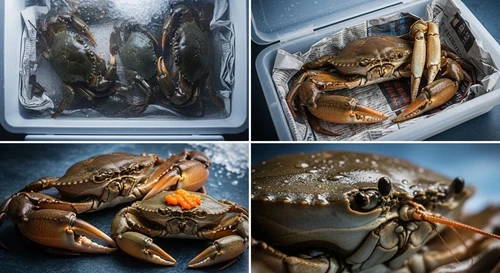
" In the sun-drenched, mud-caked world of the Mekong Delta's coastlines, amidst the tangled roots of mangroves, a tiny spectacle unfolds. It's not just about the sustenance these waters provide; it's about the raw, vibrant biology on display. "
1 Life in the Mudflats: A Fiddler's Domain
Cast your mind to the brackish waters where the mighty Mekong River kisses the sea. Here, dense mangrove forests stand sentinel, their roots forming a complex, interconnected world teeming with life. This is the natural habitat of the Fiddler Crab, or Uca species, a small, charismatic crustacean intimately tied to the rhythm of the tides.
Unlike the lumbering mud crabs prized for their substantial meat and harvested from deeper waters – the kind you’d find gracing a family feast in Ca Mau, perhaps a Ca Mau Jumbo Mud Crab – the Fiddler is a creature of the intertidal zone. They scurry across exposed mudflats during low tide, their movements a dance of survival and communication. Their world is one of salt, silt, and the constant ebb and flow of the ocean.

📸 A Fiddler Crab's home: The vibrant ecosystem of the Mekong's coastal mangroves.
It's in this specific environment, exposed to the harsh sun and the need for immediate recognition among peers, that the Fiddler Crab's unique coloration plays a crucial role. And it all starts with a simple question: why red?
2 Nature's Crimson Signal: Pigments at Play
Most of us associate that striking red hue in seafood with the application of heat. Cooking denatures proteins and transforms pigments. Carotenoids, the pigments found in many seafood diets, typically bind with proteins and appear duller. When heated, these bonds break, revealing the vibrant red of astaxanthin. Think of a classic Ca Mau Roe Mud Crab turning a beautiful scarlet when steamed – that's the magic of cooking.
But the Fiddler Crab is different. Its claws are red, or at least a vivid shade of orange-red, *before* it ever sees a cooking pot. This isn't a reaction to heat; it's a direct expression of its biology. The key lies in the presence of specific pigments, primarily carotenoids like astaxanthin, which are directly deposited and visible in the crab's exoskeleton.
Dietary Carotenoids
Fiddler crabs, like many crustaceans, ingest carotenoids from their diet, which consists of algae and other microorganisms found in the mud. These pigments are then absorbed and metabolized.
Exoskeletal Deposition
Instead of being bound to proteins in a way that masks their color (as seen in many raw, uncooked shellfish), these pigments are directly incorporated into the chitin structure of the Fiddler Crab's exoskeleton, particularly in the large claw.
3 The Mighty (and Colorful) Claw
The Fiddler Crab's signature feature, apart from its vibrant coloring, is its disproportionately large claw. This isn't just for show; it's a vital tool. In most Fiddler species, only the males possess this oversized, often brightly colored claw. The females have two smaller, symmetrical claws used for feeding.
The male's large claw serves multiple purposes:
- Courtship and Display: The waving motion of the enlarged claw is a primary method of attracting females. The brighter and larger the claw, the more attractive the male is perceived to be. It's a biological peacock feather.
- Territorial Defense: Males use their claw to ward off rivals and defend their burrows, which are essential for mating and survival.
- Fighting: In dominance battles, males will clash claws, and the color may play a role in signaling strength or deterring opponents.
This evolutionary pressure has driven the development of striking coloration in the male's claw. The red hue is essentially a visual advertisement, broadcasting the male's health, vitality, and genetic fitness to potential mates and competitors alike. It's a stark, clear signal in the dappled light and shadows of the mangrove environment.
4 A Spectrum of Red
While we often generalize "red claws," the exact shade and intensity can vary significantly between different Fiddler Crab species and even individuals. Some may display a bright crimson, others a fiery orange, and some a more subdued rusty hue. This variation is influenced by diet, age, reproductive status, and genetic factors.
It's important to distinguish these naturally colored Fiddler Crabs from other species. For instance, mudskippers, like the Ca Mau Mudskipper, are also inhabitants of these mudflats but possess entirely different physical characteristics and biological adaptations.
The Fiddler Crab's red claw is a beautiful example of adaptation. It’s a biological signal honed by millions of years of evolution, perfectly suited to the complex social dynamics and environmental pressures of its mangrove home. Unlike the culinary transformation of larger crabs, this redness is a story written in the very structure of the crab's shell.
Beyond the Color: Fiddlers in the Delta Kitchen
While the natural red of Fiddler Crab claws is a biological marvel, these crabs are also part of the culinary landscape, especially in their native regions.
Small but Mighty
Fiddler crabs are small. Their meat yield is modest compared to larger crabs, but they are often enjoyed whole, particularly their internal organs and roe, which can be rich and flavorful.
Fermented Delicacies
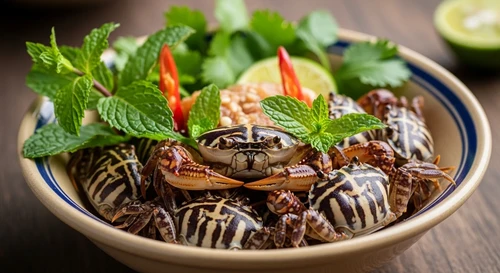
In Vietnamese cuisine, particularly in the Mekong Delta, small crabs like these are often used to create fermented products. A classic example is fermented mangrove crab (Ba Khia), which is a potent, salty-sour delicacy.
Coastal Staples
They are also a food source for larger predators and can be part of the diet for coastal communities, sometimes dried like the sun-dried wild shrimp, though less commonly.
So, while the Fiddler Crab's red claw is a biological wonder, it also hints at the rich, resourceful food traditions of the Vietnamese coast.
6 A Natural Display
The Fiddler Crab's red claws are a vivid testament to nature's artistry. They are not a sign of cooking, but a living banner of health, vitality, and reproductive success. This bold coloration, a direct result of pigment deposition from their diet and environment, serves as a critical tool for communication in the bustling, muddy world of mangrove ecosystems.
So, the next time you see one of these small wonders waving its crimson claw, remember it's a biology lesson unfolding in real-time, a splash of vibrant life against the earthy tones of the Mekong Delta's coast. It's a reminder that in the natural world, beauty and function are often inextricably linked, painted in the most striking of colors.
Common Questions
❓ Do all Fiddler Crabs have red claws?
❓ Why don't other crabs turn red naturally?
❓ Are Fiddler Crabs edible?
8 Beyond Biology: For the Kitchen
While understanding the biology behind the Fiddler Crab's red claws is fascinating, it's also worth noting their place in the culinary world, particularly in the Mekong Delta.
Selection and Preparation
- Freshness is Key: Like all seafood, Fiddler Crabs are best when extremely fresh. Live crabs are ideal if preparing them for immediate consumption.
- Size Matters (for flavor): Due to their small size, they are often cooked whole. Ensure they are thoroughly cleaned to remove grit.
- Embrace the Brine: Fiddler crabs have a strong, briny flavor. They pair well with bold seasonings or are often preserved through fermentation for an even more intense taste.
- Beware of Overcooking: Even small crabs can become tough if overcooked. A quick sauté, steam, or fry is usually sufficient.