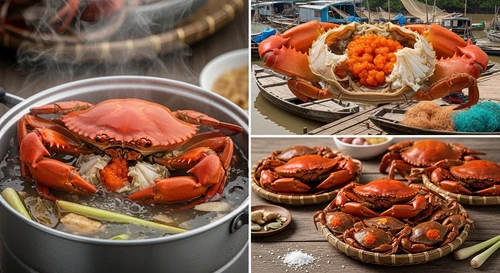
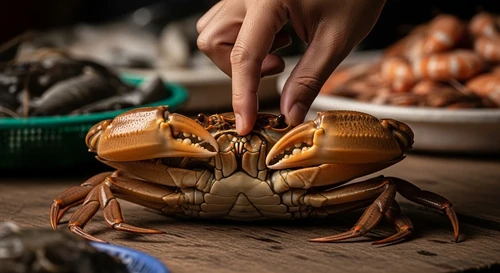
" This isn't just food; it's a journey. From the muddy banks of the Mekong Delta, where these magnificent blue crabs are harvested with generations of skill, to the fiery embrace of a claypot infused with Tom Yum's spirit. "
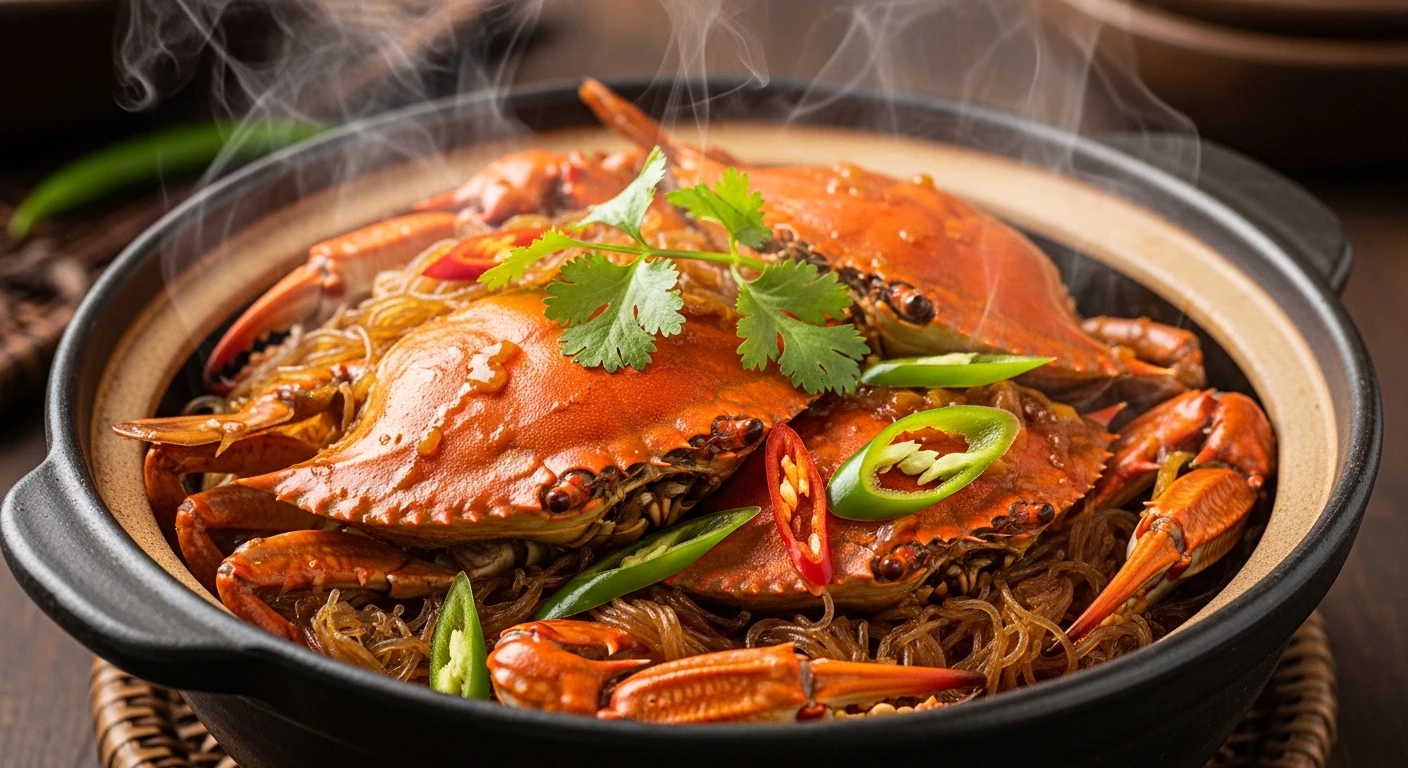
📸 The steaming claypot, a promise of rich flavors.
1 From Mangrove Depths to Your Table
The Mekong Delta, a vast labyrinth of rivers, canals, and emerald rice paddies, is the lifeblood of Vietnam’s culinary scene. And nowhere is this more evident than in its seafood. Among its prized inhabitants, the blue crab stands out. These aren't your average supermarket specimens; they are the result of a unique ecosystem, feeding on a rich diet in the brackish waters of the coastal mangroves. In places like Ca Mau, the southern tip of Vietnam, crab harvesting is not just an industry, it's a way of life, passed down through generations. The farmers know the rhythms of the tides, the habits of the crabs, ensuring a sustainable and incredibly flavorful catch.
The Ca Mau Blue Crab
Prized for its sweet, firm meat and often its vibrant roe, the Ca Mau blue crab is a delicacy. Unlike some other regions, the focus here is often on live crabs, ensuring the ultimate freshness.
Heritage Ingredient
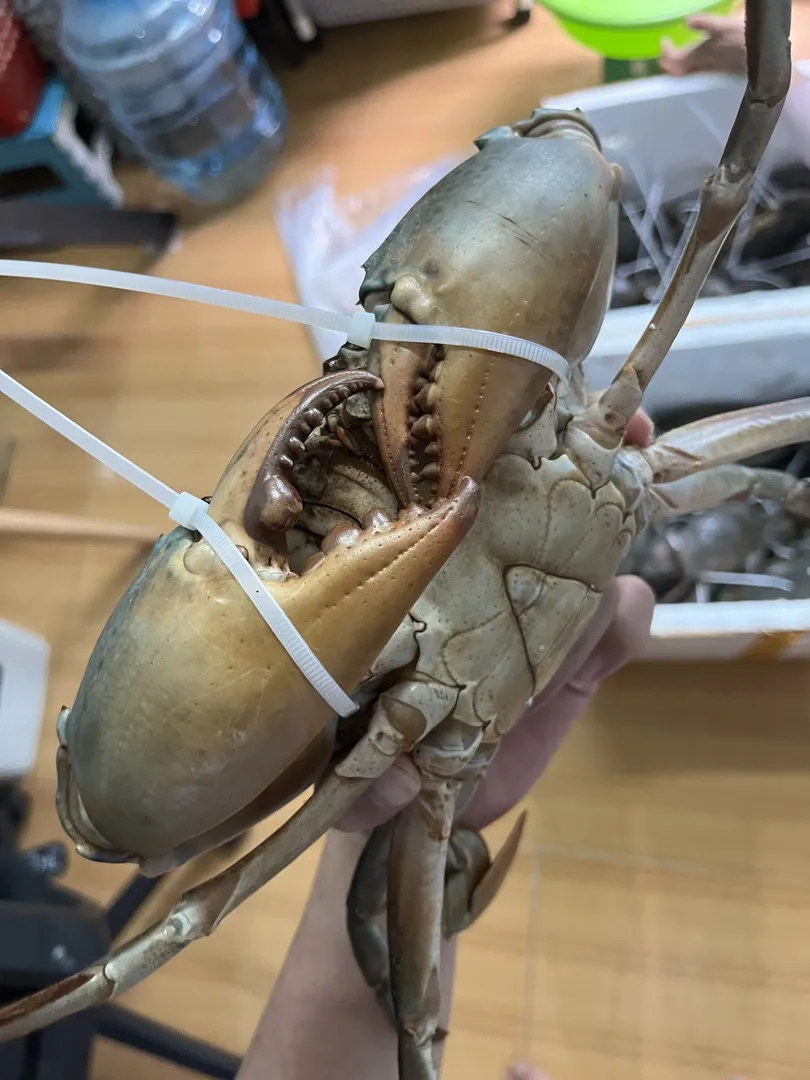
Ca Mau Jumbo Mud Crab
Ca Mau Jumbo Mud Crab
A large male mud crab prized for dense, sweet meat and thick claws, commonly used in steamed crab and grilled crab dishes across the Mekong Delta.
An icon of coastal culinary heritage, featuring firm, sweet meat that captures the raw power and freshness of Ca Mau's tides.
Roe vs. Meat Crab
In Vietnamese cuisine, the preference often leans towards female crabs (cua gạch) for their rich, creamy roe, especially during celebratory meals. However, the male crabs (cua thịt) offer substantial, sweet claw meat. This dish, with its vibrant flavors, can brilliantly showcase either.
Heritage Ingredient
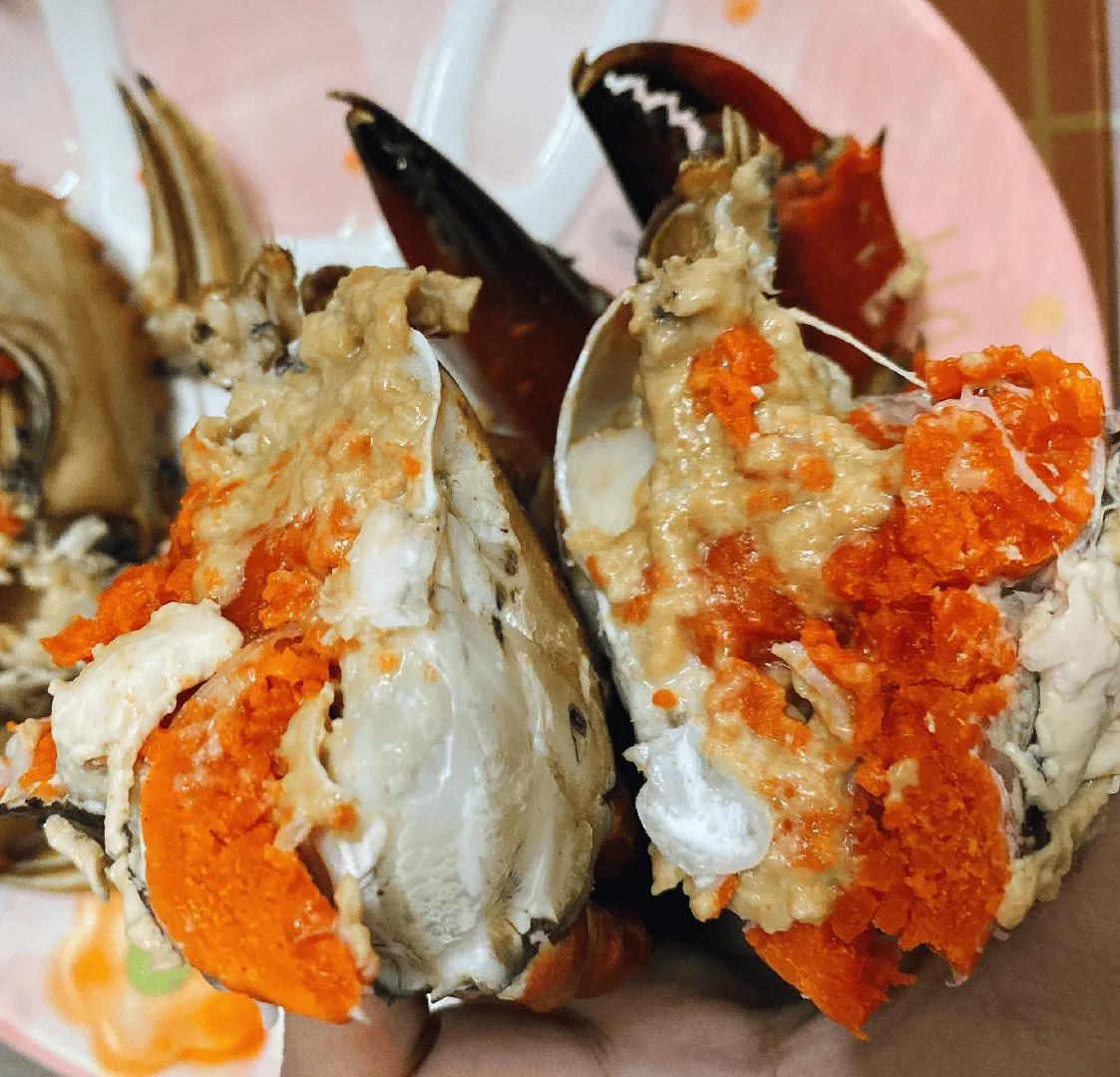
Ca Mau Roe Mud Crab
Ca Mau Roe Mud Crab
A female mud crab known for deep orange roe and a rich, creamy finish, often featured in celebratory Southern Vietnamese seafood meals.
A crimson treasure hidden within a shell, boasting rich, creamy roe that melts on your tongue like a golden sunset over the delta.
These crabs are more than just food; they are a connection to the rich biodiversity and traditional livelihoods of the Mekong Delta.
2 A Culinary Fusion of Southeast Asia
While this dish bears the "Tom Yum Style," it’s important to note its unique execution within a Vietnamese context. Tom Yum, the iconic hot and sour soup from Thailand, is celebrated for its vibrant blend of lemongrass, galangal, kaffir lime leaves, chili, fish sauce, and lime juice. Here, these aromatics are not just ingredients; they are the soul of the sauce, designed to elevate, not overpower, the natural sweetness of the crab.
Lemongrass
Smashed to release its citrusy perfume, forming the fragrant base.
Galangal (Optional, for Authenticity)
A milder, peppery cousin to ginger, adding depth.
Chili & Lime
The fiery kick and bright, sour finish that defines Tom Yum.
3 The Hearth of Flavor
The humble claypot is the unsung hero of many Asian cuisines, and for good reason. Its porous nature allows for gentle, even heat distribution, coaxing out the deepest flavors without scorching. When used for braising, it creates a contained environment where aromatics meld with the natural juices of the crab and the subtle starchiness of the glass noodles, resulting in a dish that is both comforting and intensely flavorful.

In this recipe, the glass noodles, cooked just enough to soften, form a delicate bed for the star of the show: the live blue crab. Smashed slightly to allow the braising liquid to penetrate, the crab releases its sweet liquor into the pot. The sauce, a carefully orchestrated blend of Tom Yum aromatics and savory seasonings, is then drizzled over, binding everything together as it slowly simmers. The result is a dish where tender crab meat, slippery noodles, and a complex broth create an unforgettable culinary experience.
4 Mastering the Claypot Braise
Noodle Foundation
Briefly boil mung bean glass noodles until pliable but not mushy. Drain and spread them evenly at the bottom of your claypot. This will absorb all the delicious braising liquid.
Crab Preparation
Ensure your blue crabs are live. Gently smash them with the back of a cleaver or a heavy pan. This is not about pulverizing them, but cracking the shell slightly to allow flavors to meld.
The Aromatic Sauce
In a separate bowl, whisk together minced garlic, chopped ginger, bird’s eye chilies (to taste), cilantro stems (for depth), fish sauce, a touch of sugar, lime juice, and water or crab stock. For that Tom Yum kick, incorporate lemongrass paste and a pinch of chili powder.
Assembly & Braising
Arrange the smashed crabs atop the noodles in the claypot. Pour the prepared sauce evenly over the crabs and noodles. Cover the pot tightly.
The Slow Simmer
Simmer gently over medium-low heat for about 15-20 minutes, or until the crab is cooked through and the shells have turned a vibrant red-orange. The noodles should be tender and have absorbed the luscious sauce.
More Than Just a Meal
This dish is a testament to the ingenuity of Mekong Delta cooks, who expertly blend local ingredients with global flavors. It speaks of the abundance of the waterways, the skilled hands that harvest them, and the communal spirit of sharing such a magnificent meal.
A Taste of Home
For many Vietnamese, the aroma of crab and savory braising liquids evokes memories of family gatherings and celebratory feasts.
Coastal Connection
The freshness of the crab is paramount, connecting the diner directly to the coastal livelihoods of regions like Ca Mau and the broader Mekong Delta.
Serve piping hot, directly from the claypot, garnished with fresh cilantro and sliced green peppers. A side of steamed jasmine rice is essential to soak up every last drop of the flavorful sauce.
6 Elevate Your Braise
Spicy Kick
For true Tom Yum enthusiasts, add more fresh chilies, a splash of chili oil, or a spoonful of chili bean paste (doubanjiang) to the sauce for an extra layer of heat and umami.
Creamy Indulgence
A controversial but delicious addition: a small amount of coconut milk or evaporated milk stirred into the sauce can create a richer, creamier broth that beautifully complements the crab.
Vegetable Power
Add quick-cooking vegetables like bok choy, napa cabbage, or shiitake mushrooms in the last 5-10 minutes of braising for added texture and nutrients.
Noodle Play
While glass noodles are classic, you could also experiment with other types of thin noodles like vermicelli or even udon for a different mouthfeel.
7 Presentation is Key

The visual appeal of this dish is as important as its taste. The vibrant orange-red crab, glistening noodles, and fresh green garnishes, all bubbling in their rustic claypot, are a feast for the eyes. Serve it family-style at the table, allowing everyone to dig in and experience the rich, complex flavors of the Mekong Delta infused with the spirit of Tom Yum.