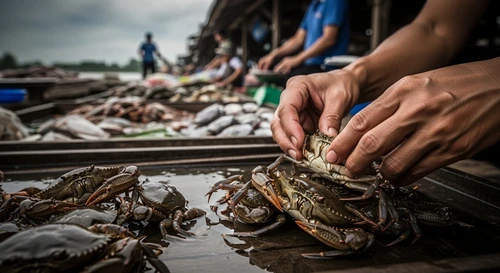
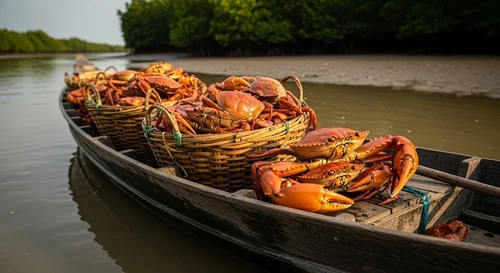
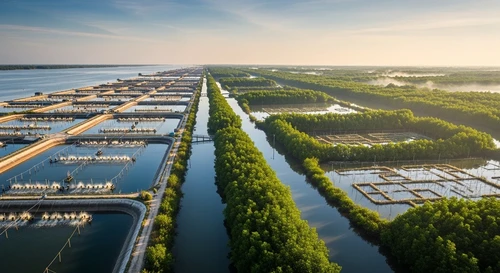
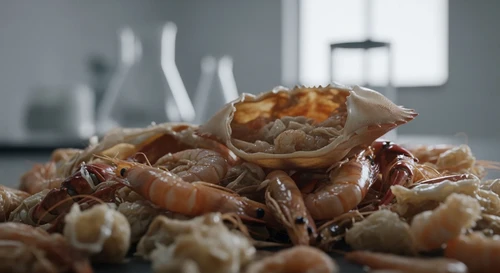
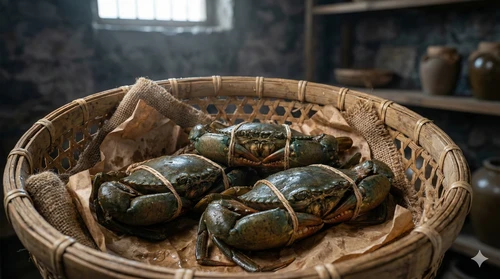
" Forget sprawling coastal farms and vast water surfaces. In the heart of Vietnam's bustling metropolis, a quiet revolution is brewing, one plastic box at a time. "

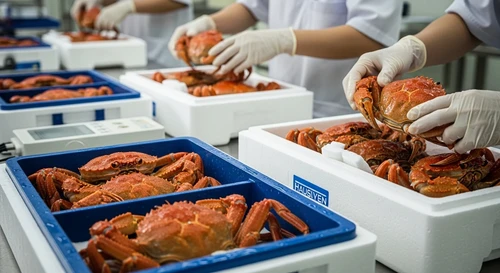
📸 A glimpse into the future: Compact, efficient crab cultivation.
1 The Concrete Jungle's Catch
Ho Chi Minh City. A sprawling megalopolis, synonymous with motorbikes, pho stalls, and a relentless, vibrant energy. It’s the last place you might expect to find a burgeoning seafood industry. Yet, amidst the urban sprawl, a new breed of entrepreneur is redefining aquaculture, proving that innovation knows no geographical boundaries.
For generations, crab farming in Vietnam, particularly in the fertile Mekong Delta region like Ca Mau, has been tied to natural environments – vast mangrove forests and intricate canal systems. These methods, while traditional and sustainable in their own right, face mounting pressures: land scarcity, environmental changes, and the ever-increasing demand for high-quality seafood.
This is where the plastic box revolution enters the scene. It’s a story of ingenuity, resourcefulness, and a keen understanding of both biology and urban economics. These aren't your grandmothers' crab ponds; this is precision aquaculture, scaled down and transplanted into the heart of the city.
2 RAS: The Heartbeat of the System
At the core of this urban crab farming system lies Recirculating Aquaculture Systems (RAS). Forget the image of a constantly flowing river or a pond that needs daily flushing. RAS is a marvel of modern engineering and ecological design, creating a controlled, self-sustaining environment for aquatic life.
Closed-Loop Water Management
The magic of RAS is its ability to recycle and treat water. Instead of continuous water exchange, which is water-intensive and can lead to pollution issues, RAS filters out waste products (like ammonia), removes pathogens, and re-oxygenates the water before recirculating it back into the system. This drastically reduces water consumption and minimizes environmental discharge.
Controlled Environment for Molting
This system is particularly crucial for cultivating soft-shell crabs. Crabs must molt, shedding their hard exoskeleton, to grow. During this vulnerable period, they require specific water parameters – temperature, salinity, and oxygen levels. RAS allows farmers to precisely control these variables, maximizing the survival rate of molting crabs and ensuring a consistent supply of premium soft-shell product.
3 Stacked High: The Box Revolution
The "plastic box" element refers to the cultivation units. Instead of sprawling ponds, these farms utilize modular, stacked plastic tanks or containers. This stacked, vertical approach is a game-changer for urban environments:
Space Efficiency
Maximizes output in a minimal footprint, ideal for land-scarce urban areas.
Scalability & Modularity
Systems can be easily expanded or reconfigured by adding more boxes or adjusting the layout.
Biosecurity Control
The contained nature of the boxes helps prevent the introduction of diseases and pests.
Ease of Monitoring & Harvest
Individual boxes allow for easier observation of crab health, molting stages, and targeted harvesting.
This approach transforms underutilized urban spaces – warehouses, rooftops, or even repurposed industrial buildings – into high-yield aquaculture hubs. It brings food production closer to the consumer, reducing transportation costs and ensuring peak freshness.
4 From Mudflats to Metropolis: A Delta Echo
While these urban farms are a testament to modern innovation, they are intrinsically linked to the traditional seafood culture of Vietnam, especially the Mekong Delta. The species farmed, the understanding of crab biology, and the culinary appreciation for crabs – particularly the prized soft-shell varieties – are all rooted in regions like Ca Mau, the Kingdom of Mud Crabs.
Ca Mau's extensive mangrove ecosystems and brackish waters have historically provided ideal conditions for mud crabs to thrive. The local communities have perfected the art of catching and cultivating these crustaceans. The move towards urban RAS farming isn't a rejection of these traditions but rather an adaptation, a way to scale production and meet modern market demands while still drawing on decades of regional expertise.
The ultimate goal for many of these urban farms is to produce high-quality soft-shell crabs – a delicacy abroad and increasingly sought after in Vietnam's own high-end dining scene. This connects back to the very essence of Mekong seafood: freshness, quality, and a deep respect for the ingredient. It’s about bringing the best of the Delta's bounty, produced efficiently and sustainably, directly to the city's tables.
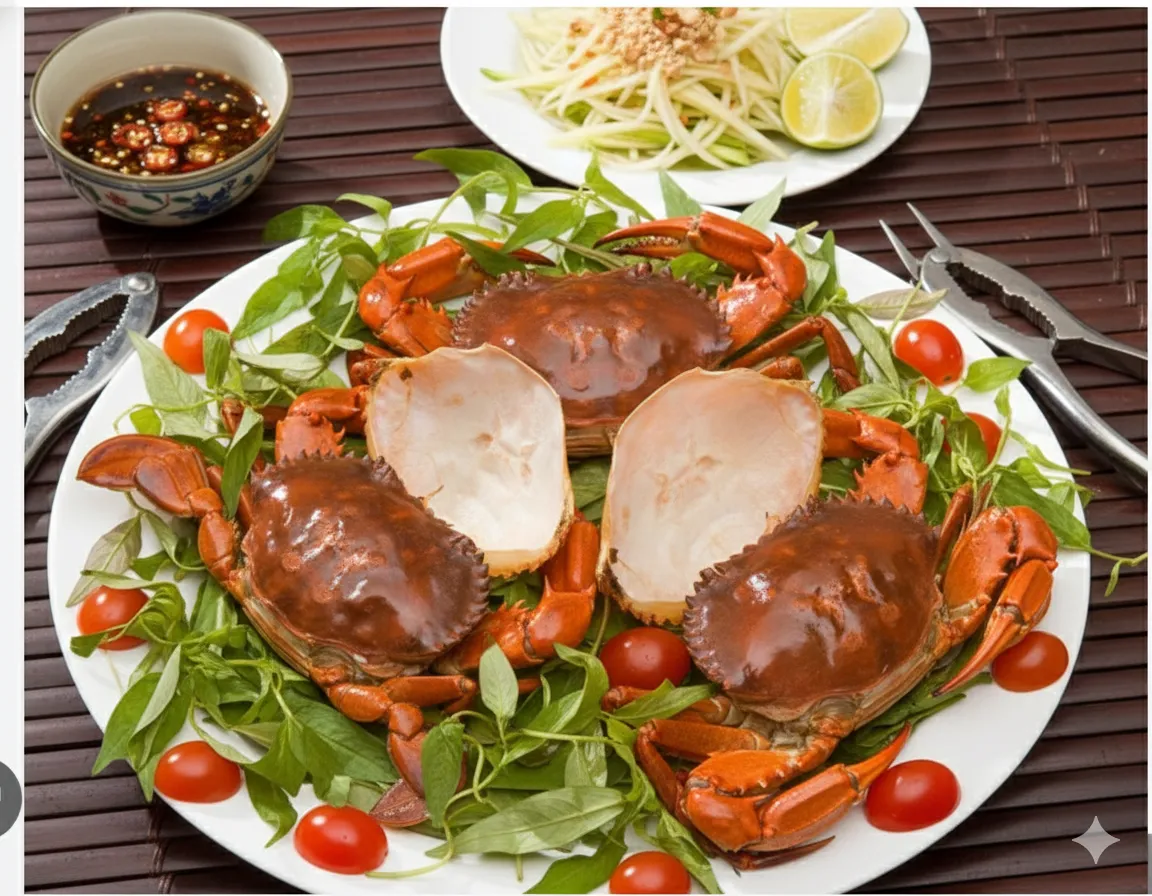
Heritage Ingredient
Soft-Shell Butter Crab (Molting Crab)
Soft-Shell Butter Crab (Molting Crab)
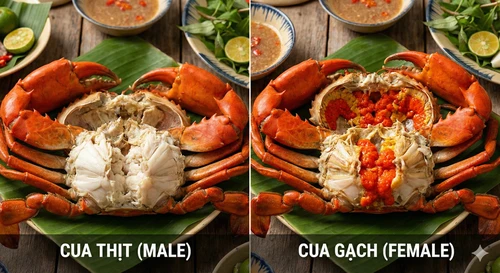
A rare molting mud crab from Ca Mau, valued for its edible soft inner shell and exceptionally creamy roe, making it the closest local equivalent to soft-shell crab concepts familiar abroad.
Nature's rare masterpiece—a delicate transition where a soft inner layer protects golden, custard-like roe in a fleeting moment of flavor.
5 A New Era in Aquaculture
The urban crab farming model using RAS and plastic boxes represents more than just an efficient farming method; it’s a paradigm shift. It speaks to the future of food production in rapidly urbanizing countries like Vietnam.
Sustainability
Significant reduction in water usage and waste compared to traditional open-water systems.
Food Security
Closer proximity of farms to consumers reduces reliance on long supply chains and enhances food security in urban centers.
Economic Opportunities
Creates new jobs and business ventures within cities, fostering economic growth and entrepreneurship.
Product Quality
Controlled environment leads to healthier crabs and consistent, high-quality soft-shell products.
As cities continue to grow and the demand for fresh, sustainably sourced seafood intensifies, innovations like these will become increasingly vital. They represent a sophisticated blend of tradition and technology, a concrete manifestation of Vietnam's adaptive spirit.
6 From Box to Banquet: The Soft Shell Star
The primary driver behind this urban RAS revolution is the lucrative market for soft-shell crabs. Unlike their hard-shelled counterparts, these crabs are harvested during their molting phase, just after they’ve shed their old exoskeleton but before the new one hardens. The result? An entirely edible, tender crustacean with a rich, buttery flavor and a delicate texture.
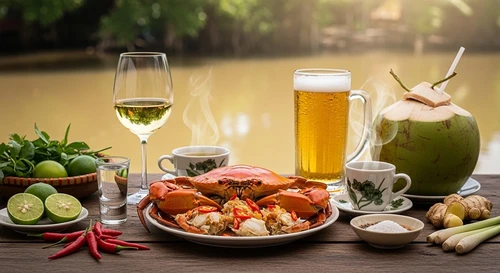
In Vietnamese cuisine, while traditionally hard-shell crabs take center stage in dishes like steamed crab with lemongrass and beer or richer preparations like tamarind crab, the soft-shell variety offers a different, more refined experience. Its edibility allows for versatile cooking methods:
- Crispy Fried: Often lightly coated and deep-fried to a perfect golden crisp, served with a zesty dipping sauce.
- Stir-Fried: Sautéed with garlic, chili, or other aromatics, retaining its tender interior.
- Curried: Incorporated into creamy, fragrant curry sauces where its softness absorbs the complex flavors.
The urban farms ensure that these delicate crabs reach kitchens at their freshest, minimizing the time between harvest and plate. This direct-to-consumer or direct-to-restaurant model is a key selling point, guaranteeing a superior product that stands out even in a city renowned for its incredible seafood scene.
7 Navigating the Future: Hurdles and Horizons
While the promise of urban RAS crab farming is immense, it’s not without its challenges. The initial setup costs for a sophisticated RAS can be substantial, requiring significant capital investment in tanks, filtration systems, pumps, and monitoring equipment.
Technical expertise is paramount. Operating and maintaining RAS requires a deep understanding of water chemistry, disease management, and the specific biological needs of crabs, particularly during their sensitive molting stages. Power reliability is also a critical factor in a city where even short outages can be catastrophic for a closed-system aquaculture setup.
However, the opportunities far outweigh the hurdles. As technology advances and the economics of scale improve, these urban farms are poised to become a cornerstone of Vietnam's future seafood supply. They offer a sustainable, efficient, and innovative pathway to meet global demand for high-quality seafood, all while bringing aquaculture closer to home and fostering new avenues for entrepreneurial spirit within the vibrant tapestry of Vietnamese cities.
8 The Enduring Spirit of the Crab
The story of urban crab farming in Ho Chi Minh City is more than just a tech report or a business case study. It's a narrative about adaptation, resilience, and the enduring legacy of Vietnam's connection to its aquatic bounty. It's about a younger generation, inspired by the rich culinary traditions of the Mekong Delta, leveraging cutting-edge technology to create a sustainable future for seafood.
From the muddy banks of Ca Mau to the bustling streets of Saigon, the humble crab continues to inspire innovation, bridging the gap between tradition and the future. These plastic box farms are a vibrant symbol of that journey, proving that even in the most unexpected places, the spirit of the Mekong Delta continues to thrive.