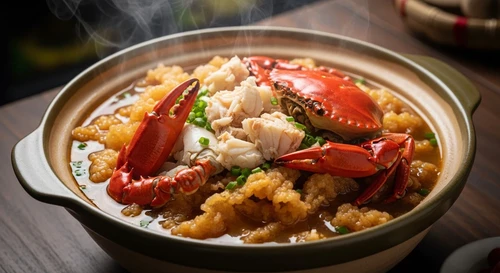
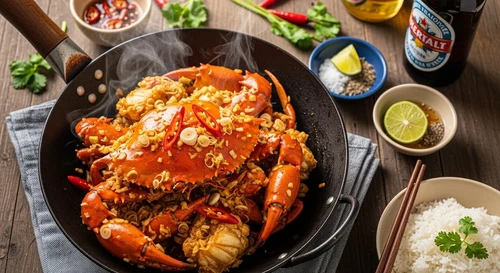
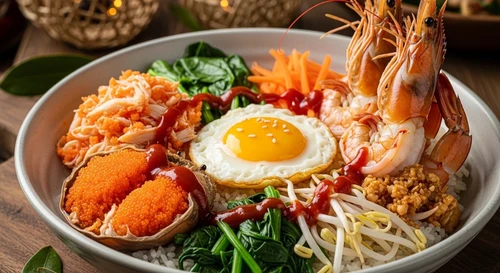
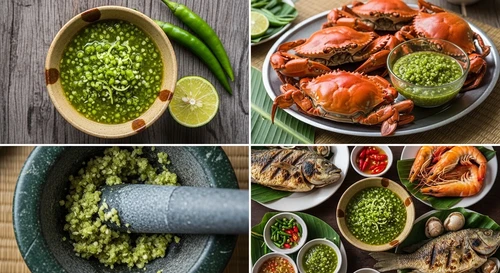
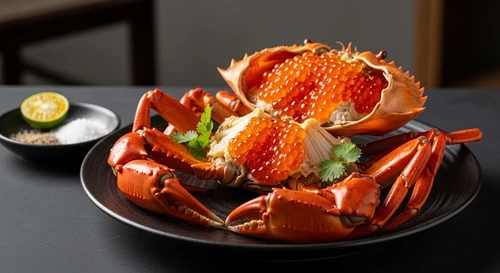
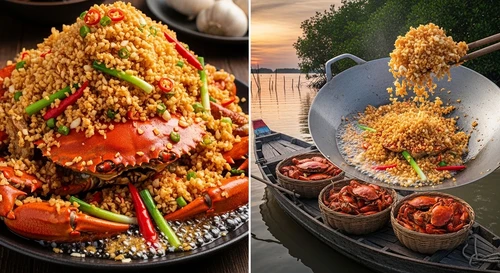
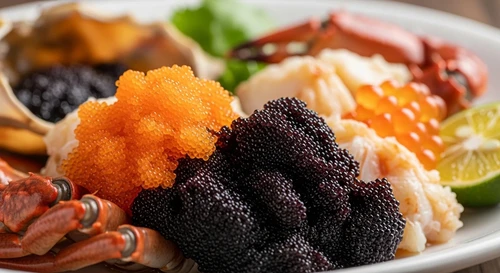
" Imagine this: a late afternoon in Ca Mau. The sun dips low, painting the sky in hues of fire and gold. The air is thick with humidity and the promise of the evening's bounty. This is the moment when a dish like this, with its electrifying aroma, truly comes alive. "
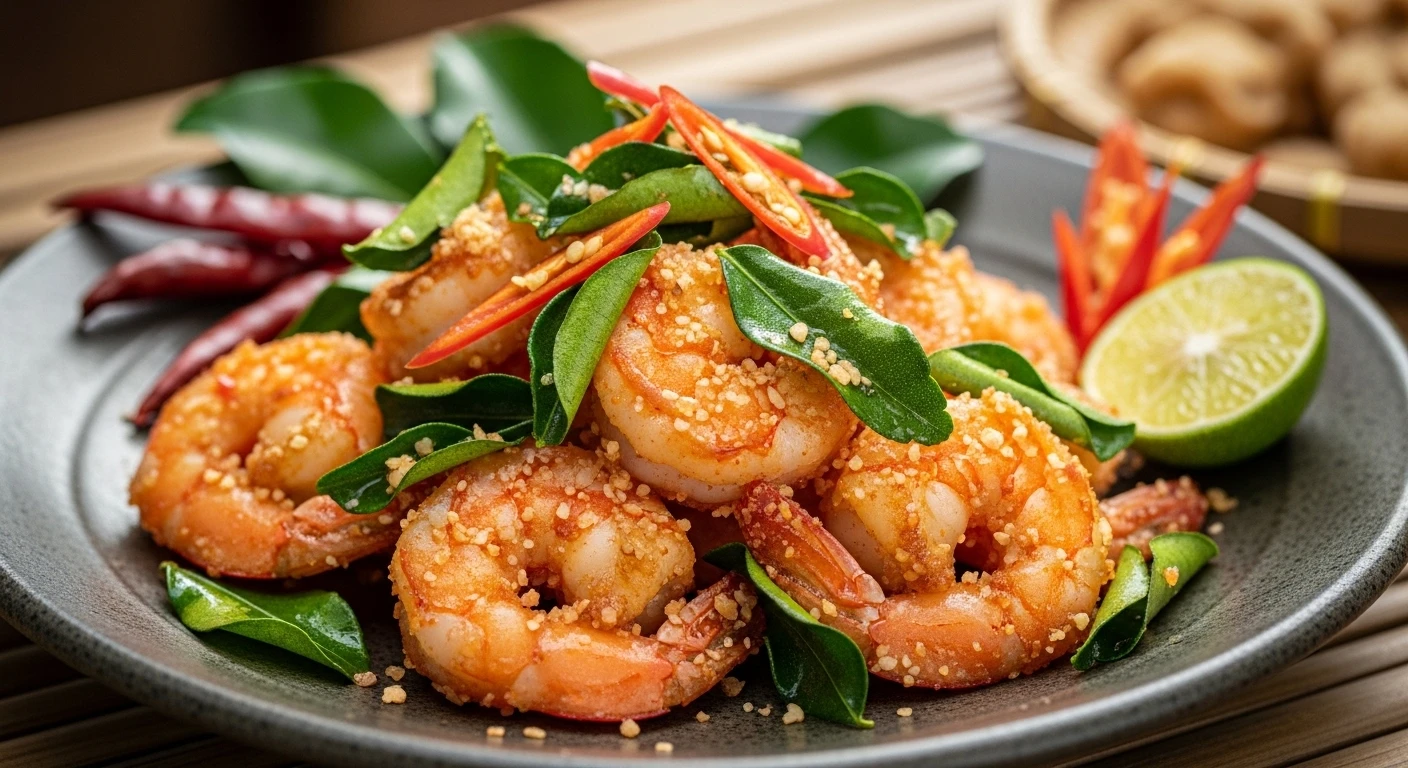
📸 A symphony of texture and aroma, ready to tantalize your senses.
1 The Soul of Southern Coastal Flavors
The Mekong Delta, particularly its southern coastal regions like Ca Mau and Bac Lieu, is a paradise for seafood lovers. Here, the bounty of the sea is not just a commodity; it's a way of life. The region’s cuisine is a testament to this, characterized by its freshness, vibrant flavors, and ingenious use of local ingredients. While elaborate crab dishes and steaming methods grace many tables, there's a special place in the heart for simple, yet explosive snacks like this shrimp dish. It’s a dish that speaks of sunny afternoons, cool drinks, and the pure joy of good food shared.
Heritage Ingredient
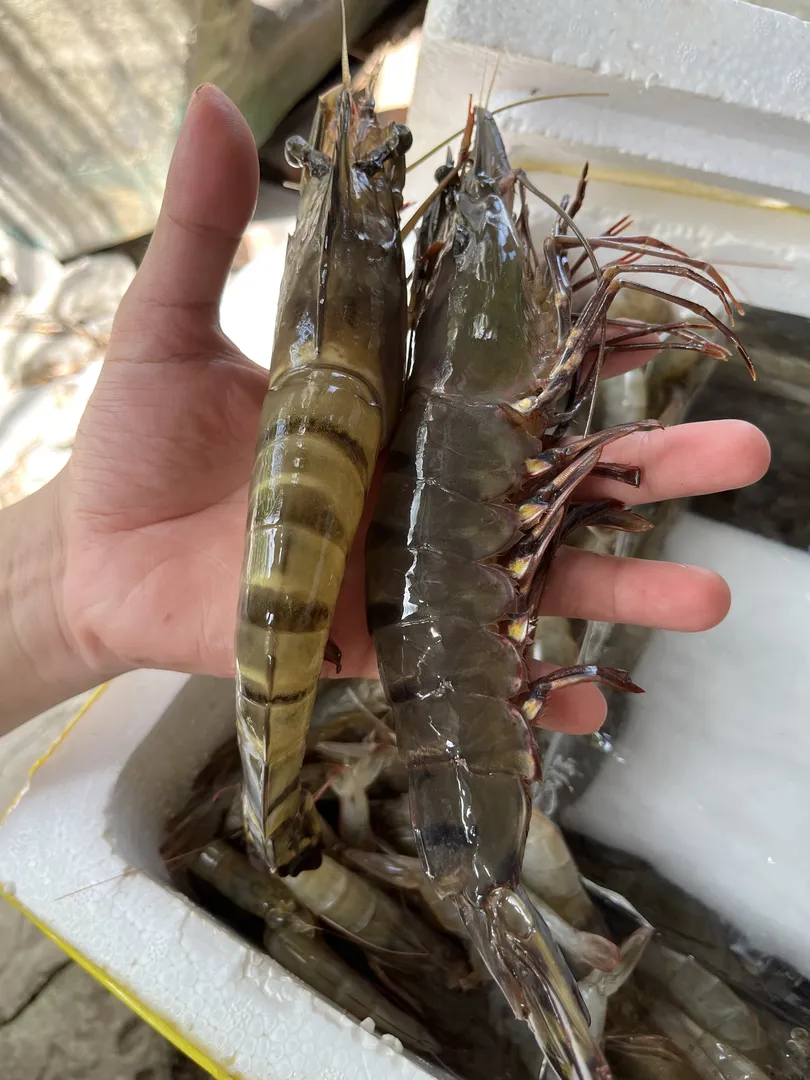
Ca Mau Black Tiger Shrimp
Ca Mau Black Tiger Shrimp
Large black tiger shrimp associated with mangrove aquaculture in Ca Mau, known for firm flesh and a cleaner, sweeter finish than intensively farmed shrimp.
Wild spirits of the mangroves, these black-banded gems deliver a firm, snappy texture and a sweetness that echoes the forest's vibrant life.
This isn't just about fried shrimp; it’s about the symphony of chili salt and the fragrant, almost perfumed, essence of julienned lime leaves. It’s a dance between heat, salt, and citrus that awakens the palate, making it a perfect accompaniment to a cold beer or a refreshing glass of iced tea. It's the kind of dish that makes you crave another bite, then another, until the plate is clean.
2 Decoding the Magic: The Star Ingredients
At its core, this dish is deceptively simple, which is often the hallmark of great regional cooking. The magic lies in the quality of the ingredients and the harmony they create.
The Shrimp
For this dish, plump, fresh shrimp are essential. In the Mekong Delta, you'll find an abundance of sweet, firm shrimp, like the prized Ca Mau Black Tiger Shrimp, farmed sustainably in the region's intricate mangrove ecosystems. The key is to use shrimp that are large enough to hold their flavor when fried and coated, but not so large that they become rubbery. Size matters for texture here – medium to large is ideal.
Chili Salt
This isn't your average chili powder. It’s a dry-roasted blend, which imparts a deeper, more complex flavor and a less aggressive heat. The salt, usually fine sea salt, provides the perfect counterpoint to the chili's warmth. Roasting the chilies and salt together before coating the shrimp is a crucial step that unlocks a nutty, toasted aroma.
The Lime Leaves (Lá Chanh)
This is where the dish truly sings. Fresh lime leaves, thinly julienned (kaffir lime leaves are the closest Western equivalent), release an intensely fragrant, citrusy aroma when they hit the heat of the fried shrimp. It's not just a hint of lime; it's a potent, bright burst that cuts through the richness of the fried coating and the subtle sweetness of the shrimp. The aroma itself is transportive, instantly evoking the humid air of a Southern Vietnamese kitchen.
3 The Crispy Alchemy: Crafting the Perfect Bite
The technique is as important as the ingredients. Achieving that perfect crispy exterior without overcooking the delicate shrimp is an art. Here's the breakdown for bringing this Delta delight to your table:
Prep the Shrimp
Peel and devein the shrimp, leaving the tail on for a better grip and presentation. Pat them thoroughly dry with paper towels – this is crucial for achieving crispiness.
The Coating
Lightly dust the dried shrimp with a mix of cornstarch and a pinch of salt. This helps the final chili salt coating adhere and adds an extra layer of crispiness.
Fry to Golden Perfection
Heat oil in a wok or deep pan to about 170-180°C (340-350°F). Fry the shrimp in batches until golden brown and crispy, about 1-2 minutes. Do not overcrowd the pan. Drain well on a wire rack.
The Final Toss
In a clean, warm wok, gently toss the fried shrimp with your prepared chili salt and the fresh, julienned lime leaves. The residual heat will bloom the lime leaf aroma. Serve immediately.
4 The Chili Salt & Lime Leaf Blend: Your Flavor Architect
This is where the magic happens. The beauty of this blend is its aromatic intensity and the subtle complexity it brings.
Crafting the Blend
The goal is a fragrant, zesty, and savory coating that enhances, not overwhelms, the natural sweetness of the shrimp.
Dry Roasted Chili
Use dried chilies (like bird's eye or Korean chili flakes) – toast them briefly in a dry pan until fragrant, then grind into a powder. This removes raw heat and adds depth.
Fine Sea Salt
A good quality fine sea salt dissolves well and coats evenly. Adjust to your preference.
Julienned Lime Leaves
Essential for that vibrant citrus aroma. Remove the tough central rib and slice the leaves paper-thin. Use them fresh for maximum impact.
Mix the chili powder and salt to taste. Toss with the fresh lime leaves just before coating the shrimp.
5 Pro Tips for Delta-Level Crispiness
- Dry is Key: I can't stress this enough. Water is the enemy of crispiness. Pat those shrimp bone dry!
- Hot Oil, Quick Fry: Use plenty of oil at the correct temperature. A quick fry is essential to cook the shrimp through without making them tough.
- Don't Overcrowd: Fry in small batches. Overcrowding lowers the oil temperature, leading to greasy, soggy shrimp.
- Drain on a Rack: Not paper towels. A wire rack allows air circulation, keeping the bottoms crisp.
- Toss Last Minute: The chili salt and lime leaves are best tossed right before serving to maintain their aroma and the shrimp's crispness.
- Freshness Matters: Use the freshest lime leaves you can find. Their fragrance is paramount.
6 From Kitchen to Mekong Moment
This dish truly shines as a prelude to a larger meal, an appetizer, or as the perfect accompaniment to a cold beverage.
- The Ultimate Drinking Snack: Its bold flavors and satisfying crunch make it an irresistible companion to beer, rice wine, or even a tropical cocktail.
- Appetizer Excellence: Serve a small portion before a classic Vietnamese meal – it whets the appetite beautifully.
- Party Starter: It’s always a crowd-pleaser at gatherings and parties.
- A Taste of Home: For those who grew up in the Delta, this dish evokes comforting memories of family meals and coastal living.

Heritage Ingredient
Chili Salt Lime Leaf Shrimp
Chili Salt Lime Leaf Shrimp
A quintessential Mekong Delta appetizer, featuring crispy fried shrimp coated in a fragrant blend of chili salt and fresh lime leaves.
Where every ingredient captures the essence of the wind and tides, weaving a vibrant culinary tapestry of the Mekong region.
7 Mekong Delta: A Culinary Archipelago
The Mekong Delta is not just a geographical region; it's a vibrant, watery world where life revolves around the rivers and canals. Its food culture is as diverse and dynamic as its landscape. From the iconic floating markets where produce is bought and sold directly from boats, to the intricate aquaculture farms that supply the nation with shrimp and fish, the Delta’s culinary identity is deeply intertwined with its environment. Dishes like this fried shrimp, with their focus on fresh, local ingredients and punchy flavors, are a microcosm of this rich gastronomic tapestry. They tell a story of resourceful cooks, abundant nature, and a culinary heritage passed down through generations. Exploring these flavors is like navigating the Delta itself – full of surprising delights at every turn.
Frequently Asked Questions
🌶️ Can I use fresh chilies instead of dried?
🌿 What if I can't find kaffir lime leaves?
🍤 Can I use smaller shrimp?
Craving More Seafood Adventures?
The Mekong Delta is a treasure trove of seafood dishes. Discover another local favorite that’s all about pure, unadulterated flavor.
🌊 Dive into Steamed Crab with Beer