" The Mekong Delta isn't just about jade-green rice paddies and winding rivers; it's a powerhouse of marine bounty. And when it comes to exporting that bounty alive, to be savored on the other side of the planet, precision and innovation are key. Forget the days of guessing; we're talking science. "
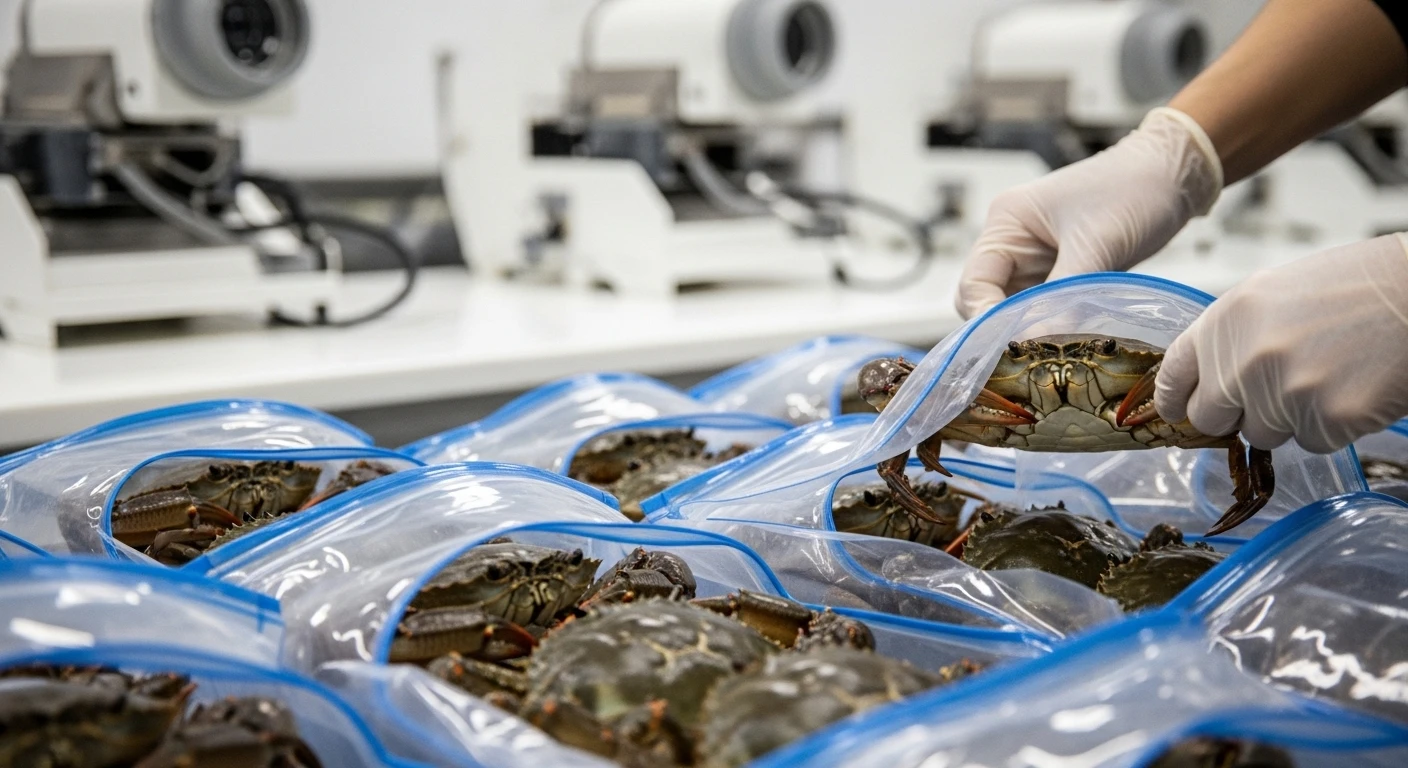
📸 Precision Packaging: Ensuring every crab arrives in peak condition.
1 The Jewels of the Mangroves
The Mekong Delta, particularly the coastal provinces like Ca Mau, is renowned for its mud crabs. These aren't just any crabs; they are prized for their dense, sweet meat and rich roe. For generations, the livelihood of coastal communities has been tied to the sustainable harvest of these crustaceans. The very waters, a complex interplay of freshwater and saltwater, create an ideal environment for the Mud Crab (Scylla serrata).
Whether it's the coveted roe crab (cua gạch) with its vibrant orange roe, or the substantial meat crab (cua thịt) with its formidable claws, the demand for these high-quality specimens extends far beyond Vietnam's borders. However, shipping live seafood, especially delicate creatures like crabs, across vast distances presents a formidable logistical and biological challenge.
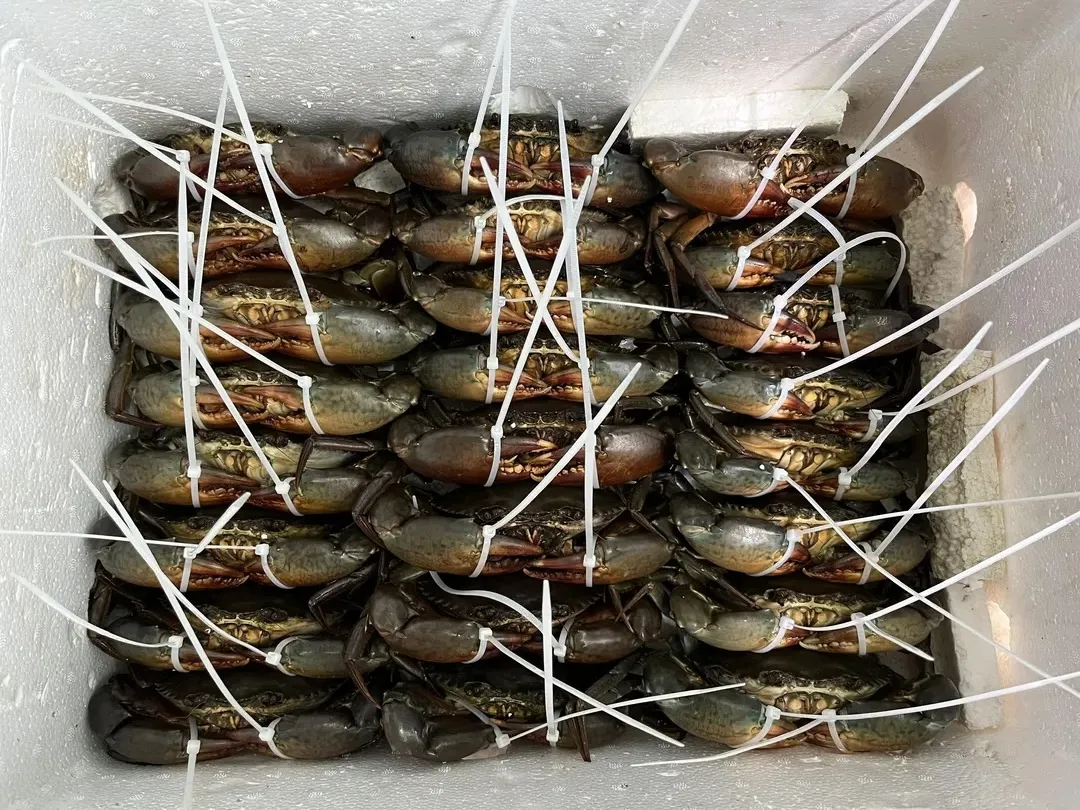
Heritage Ingredient
Export-Grade Ca Mau Roe Crab
Export-Grade Ca Mau Roe Crab
A carefully sorted roe crab selected for size, shell quality, and roe consistency, suitable for explaining premium grading in Vietnamese crab culture.
The pinnacle of perfection—pristine shells and bursting roe, meticulously selected to conquer the hearts of global gourmets.
2 Keeping Them Alive: A Race Against Time
Live crabs are highly sensitive to their environment. During transit, they face stressors such as:
- Oxygen Deprivation: Crabs breathe underwater. Limited air supply during transport is a critical threat.
- Waste Accumulation: Crabs excrete ammonia and other waste products, which can quickly pollute their immediate environment, becoming toxic.
- Temperature Fluctuations: Uncontrolled temperatures can lead to stress, disease, or death.
- Physical Trauma: Rough handling can injure the crabs.
Traditional methods of packing live seafood often involve simple wet packing or limited airflow, which can be insufficient for long-haul flights of 24 hours or more. The goal is not just survival, but maintaining the crab's vitality and quality upon arrival.
3 A Breath of Fresh, Purified Air
Ozone: Nature's Purifier
Ozone (O₃) is a highly reactive molecule composed of three oxygen atoms. It's a powerful oxidizing agent, naturally present in the atmosphere. In this application, medical-grade ozone is carefully injected into the packaging. Its primary roles are:
- Sterilization: Ozone effectively kills bacteria, viruses, fungi, and other pathogens that can proliferate in a closed environment and threaten the crabs' health.
- Oxidation of Waste: It helps break down harmful waste products, purifying the water and air within the packaging.
- Improving Water Quality: By oxidizing impurities, ozone can contribute to a cleaner aquatic environment for the crabs.
Medical Oxygen: The Life Support
Alongside ozone, pure medical-grade oxygen (O₂) is used. This is crucial for:
- Enhanced Respiration: Providing crabs with a richer oxygen supply than ambient air significantly improves their ability to respire during the extended journey.
- Sustained Vitality: Adequate oxygen levels keep the crabs active and reduce stress, ensuring they remain in better condition upon arrival.
4 From Tank to Transporter: A Delicate Operation
The process is meticulously managed to ensure the highest survival rates. It typically involves several key steps:
Crab Selection & Acclimation
Only prime, live specimens are selected. They are often held in controlled tanks to ensure they are healthy and strong before packaging. A brief acclimation period in cool, clean water helps them recover from any handling stress.
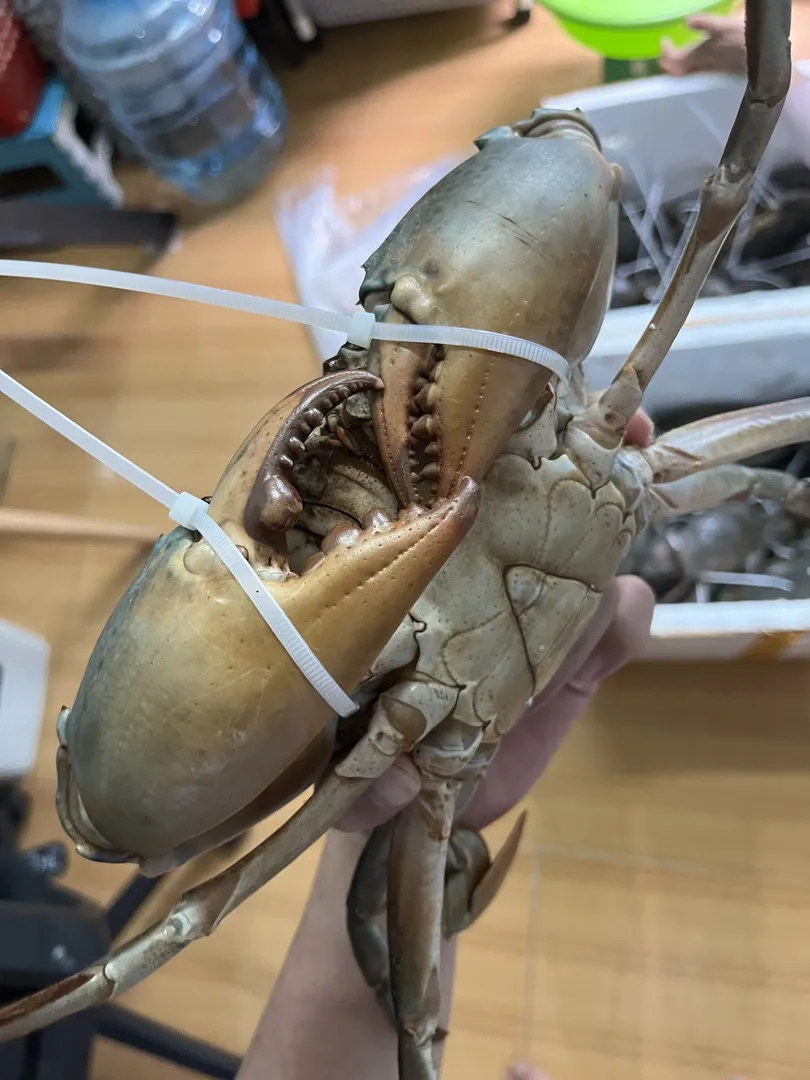
Heritage Ingredient
Ca Mau Jumbo Mud Crab
Ca Mau Jumbo Mud Crab
A large male mud crab prized for dense, sweet meat and thick claws, commonly used in steamed crab and grilled crab dishes across the Mekong Delta.
An icon of coastal culinary heritage, featuring firm, sweet meat that captures the raw power and freshness of Ca Mau's tides.
The Enclosure & Gas Injection
Crabs are typically placed in specialized, breathable bags or containers designed for live seafood transport. These are often lined with absorbent material to manage moisture. Medical oxygen is carefully introduced, followed by a precisely measured dose of ozone. The bags are then sealed to maintain the controlled atmosphere.
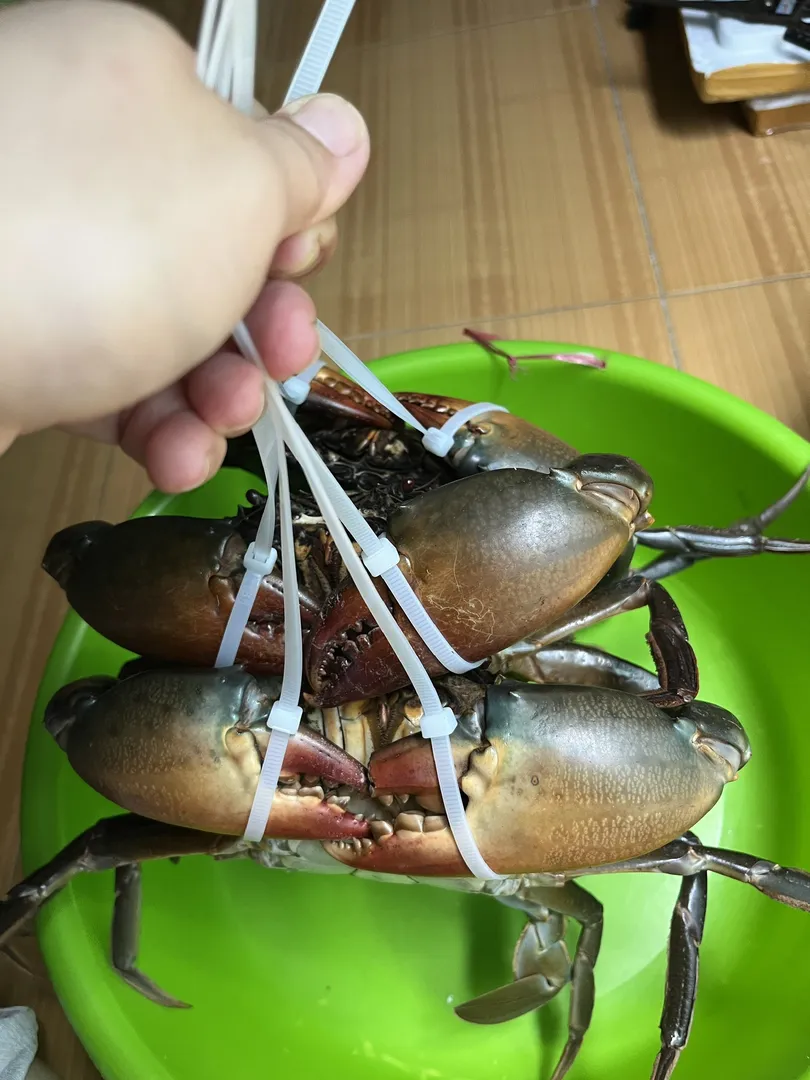
Heritage Ingredient
Giant Ca Mau Mud Crab
Giant Ca Mau Mud Crab
A larger export-grade mud crab with dramatic claws and thick meat, often used to illustrate oversized crab categories in Vietnamese seafood markets.
A titan of the ocean, offering colossal claws filled with muscular, succulent meat that elevates every feast into a royal experience.
The amount of ozone and oxygen, as well as the packaging material, are tailored based on the species, expected transit time, and environmental conditions. This isn't a one-size-fits-all approach; it's a scientific protocol.
Achieving Near-Perfect Transit
The claim of "100% survival" for a 24-hour flight is ambitious, yet achievable with this method. It signifies the effectiveness of the ozone and oxygen system in mitigating the primary causes of mortality during transit.
Stress Reduction
A stable, purified environment significantly reduces physiological stress.
Pathogen Control
Ozone's antimicrobial properties prevent disease outbreaks.
Optimal Respiration
Abundant oxygen ensures crabs remain active and healthy.
This advanced packaging isn't just about keeping crabs alive; it's about delivering them to international markets in a state that reflects the quality of their origin – a testament to the Mekong Delta's bounty and Vietnamese ingenuity in aquaculture logistics.
6 From Farm to Table, Across Continents
The journey from the Mekong Delta farms and estuaries to a diner's plate overseas involves a complex choreography of logistics. This advanced packaging is a critical link in that chain. It enables:
- Extended Shelf Life: Allows for longer transit times without significant quality degradation.
- Market Expansion: Opens up new international markets previously inaccessible due to logistical limitations.
- Reduced Spoilage: Minimizes losses for exporters and ensures fresher product for consumers.
- Brand Reputation: Upholds the reputation of Vietnamese seafood as high-quality and reliably delivered.
This technological leap benefits not only the exporters but also the entire value chain, ensuring that the incredible seafood from regions like Ca Mau can be enjoyed globally, maintaining its integrity from its source to the consumer's table.
7 Innovation on the Water's Edge
The application of ozone and medical oxygen in live crab packaging represents a significant advancement in seafood logistics. It's a prime example of how modern science can enhance traditional resource management and trade. As global demand for high-quality, live seafood continues to grow, such innovations are crucial for sustainable growth and for showcasing the premium products of regions like the Mekong Delta to the world.
Expect to see further refinements in breathable packaging materials, temperature control technologies, and perhaps even real-time monitoring systems, all working in concert to ensure that the freshest catch makes it from the intricate waterways of Vietnam to your plate, wherever you may be.
Why Does This Matter to You?
For the end consumer, this advanced packaging translates directly into a superior dining experience.
Peak Freshness
Crabs arrive lively and in excellent condition, preserving their natural sweetness and texture.
Superior Quality
The risk of stress-related quality loss is dramatically reduced.
Trustworthy Source
You can be confident in the integrity of the seafood you are purchasing.
More on Mekong Seafood Logistics & Innovations
View More Buyer's Guide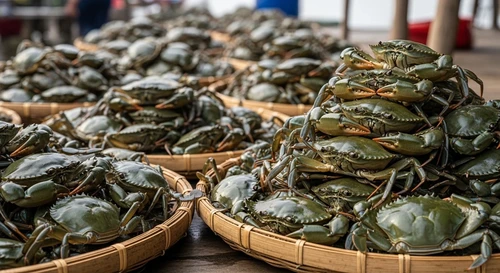
Heavy Rains in Ca Mau Trigger Massive Crab Harvests
Lowered salinity levels from early monsoons encourage crab foraging and molting, resulting in a sudden spike in market supply.
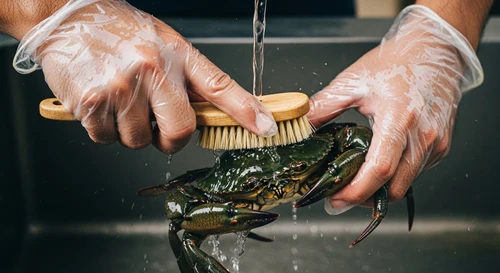
Cleaning Mud Crabs: Step by Step
Removing the mud and dirt from the shell.
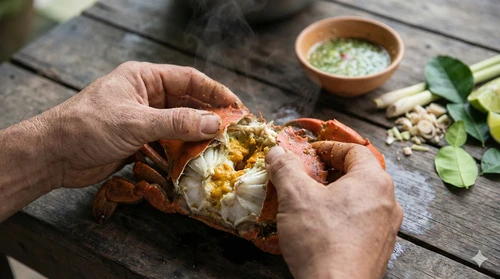
How to Eat Mud Crab Like a Pro
Extract every bit of meat without wasting anything.
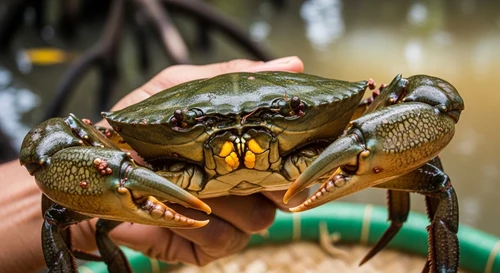
How to Spot a Fake Ca Mau Crab
Distinguishing authentic crabs from cheap farm crabs.
Dining Etiquette: Is it Okay to Use Hands?
Cultural norms when eating seafood in Vietnam.
Seafood Packaging Innovations: The End of Polystyrene?
Exploring biodegradable alternatives to styrofoam boxes for shipping live crabs and shrimp across the country.
Startups Tackle the Crab Shell Waste Problem
New biotech companies in Vietnam are extracting Chitosan from discarded seafood shells for use in medical and agricultural products.
Farm-Gate Shrimp Prices Today: Soc Trang & Bac Lieu Updates
Live tracking of wholesale prices for 20, 30, and 40-count per kilo shrimp sizes to help farmers and traders.
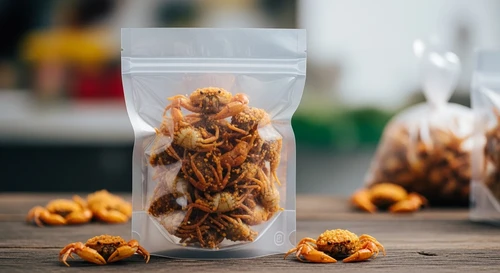
Dehydrated Seasoned Baby Crabs: A Potential Export Goldmine
How central Vietnamese processors are packaging crispy, spiced baby crabs to target international snack markets like Amazon.