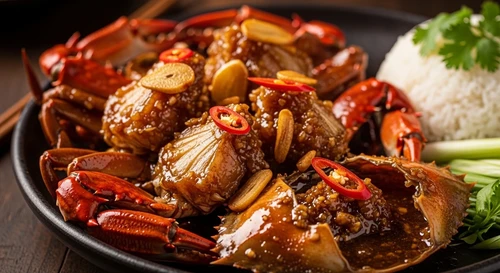
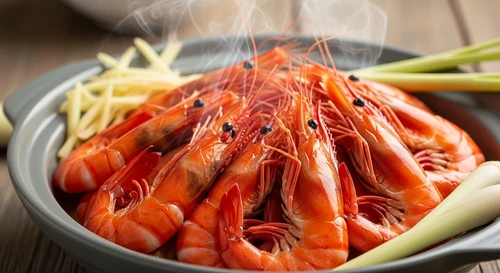
" Forget subtle. This isn't about whispering sweetness; it's a joyous shout from the riverside markets. Tamarind and coconut, the twin anchors of Southern Vietnamese flavor, wrestling with the ocean's bounty. "

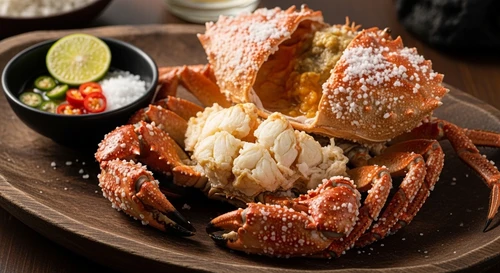
📸 The sticky embrace: Every crevice of the crab shell coated in that irresistible glaze.
1 Where Rivers Meet the Sea: The Mekong's Treasure
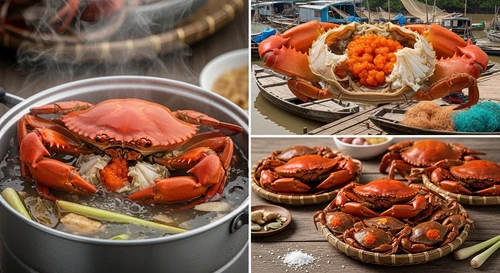
The Mekong Delta is more than just rice paddies and fruit orchards; it's a vast network of rivers, canals, and coastal estuaries that form the lifeblood of Southern Vietnam. This fertile, humid landscape blesses the region with an unparalleled bounty of seafood, and among its most prized possessions are the vibrant blue crabs that thrive in these brackish waters.
Ca Mau province, at the southernmost tip of Vietnam, is particularly renowned for its high-quality mud crabs. These aren't your average crustaceans; they are robust, meaty, and packed with a delicate sweetness that demands respect. When we talk about this Tamarind Coconut Crab, we're talking about honoring that delta freshness.
The Blue Crab
Often referred to as "Sentinel Crab" in local lore, these crabs are identified by their distinct blue legs and shells, indicative of their habitat in mineral-rich brackish waters.
Ca Mau's Pride
The crabs from Ca Mau are celebrated for their thick, sweet meat and rich roe (for female crabs), making them the star ingredient for many celebratory Southern Vietnamese dishes.
Heritage Ingredient
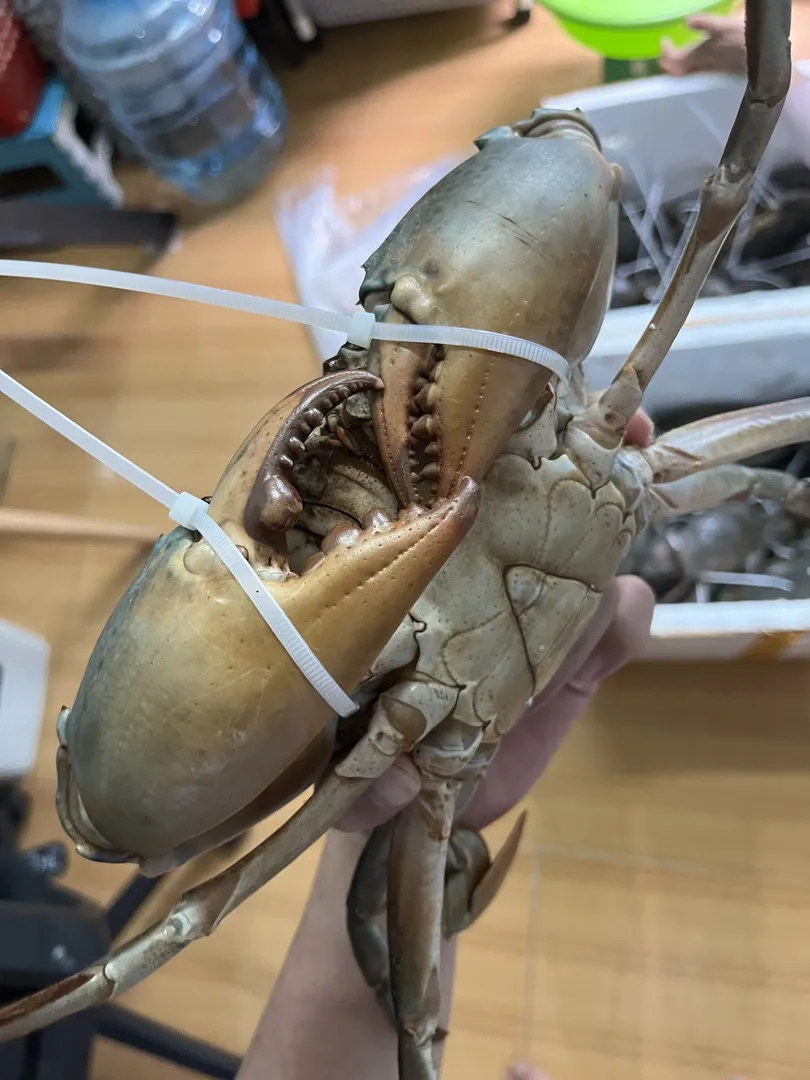
Ca Mau Jumbo Mud Crab
Ca Mau Jumbo Mud Crab
A large male mud crab prized for dense, sweet meat and thick claws, commonly used in steamed crab and grilled crab dishes across the Mekong Delta.
An icon of coastal culinary heritage, featuring firm, sweet meat that captures the raw power and freshness of Ca Mau's tides.
2 The Sweet, Sour, Savory Trinity
The magic behind this dish lies in its sauce, a masterful balance of fundamental Vietnamese flavors. It’s a culinary alchemy where the sharp tang of tamarind meets the creamy, mellow sweetness of coconut milk, all reduced to a luscious, clinging glaze.
Tamarind (Me)
The sour backbone. We use tamarind paste, which provides a complex, fruity tartness that cuts through the richness of the crab and coconut. It’s not just sour; it’s a deep, aromatic tang.
Coconut Milk (Em)**
The creamy counterpoint. Rich, full-fat coconut milk provides a luxurious mouthfeel and a subtle, tropical sweetness. It mellows the tamarind and creates a perfect vehicle for the flavors.
The Supporting Cast
Garlic, shallots, and a touch of sugar (or palm sugar for extra depth) are essential to build the aromatic base and round out the flavor profile before the reduction. A hint of chili is often thrown in for those who like a little fire.
3 From Pot to Plate: A Sticky Dance
Sauté the Aromatics
Heat a little oil (or use some of the crab's natural juices). Sauté minced garlic and shallots until fragrant. Add the tamarind paste and cook for a minute, then stir in the coconut milk and sugar.
The Slow Reduction
Bring the sauce to a simmer. Let it bubble gently, stirring occasionally, until it thickens and reduces to a syrupy glaze. This might take 10-15 minutes. Taste and adjust seasoning – more sugar for sweetness, a splash of fish sauce for umami, or a bit more tamarind for tang.
Coat the Crab
Add your prepared blue crabs to the simmering glaze. Toss them gently to ensure every piece is coated. Cook for another 5-7 minutes, allowing the crab to absorb the flavors and the glaze to caramelize slightly onto the shells.
Serve with Joy
Plate immediately. Garnish with fresh cilantro or sliced chilies if desired. The real joy is in cracking the shells and savoring the sticky, succulent meat. Serve with steamed rice to mop up any leftover glaze.
4 Secrets from the Riverbanks
Crab Selection
Use the freshest live crabs possible. For this dish, mud crabs from Ca Mau are ideal due to their dense meat. Ensure they are lively. If using smaller blue crabs, adjust cooking time.
Glaze Consistency
Don't rush the reduction. A well-reduced glaze will coat the crab beautifully without being too watery or too thick like candy. It should be viscous enough to cling, but still slightly fluid.
The Tamarind Trick
For a smoother glaze, strain your tamarind paste after soaking it in hot water to remove seeds and fibrous bits. This ensures a silky texture without gritty bits.
Pairing Perfection 🍚
This dish is a flavor punch, so simple accompaniments are best to let the crab shine.
Steamed Rice
The absolute classic. Essential for soaking up that glorious glaze.
Fresh Greens
A side of blanched water spinach or lettuce leaves provides a refreshing contrast.
Herbs & Lime
A simple plate of fresh cilantro, mint, and lime wedges for an extra burst of freshness.
5 A Taste of Home
Imagine sitting by the Cai Rang floating market in Can Tho, or a quiet canal-side eatery in Soc Trang. The air is thick with humidity, the gentle lapping of water against wooden piers, and the aromas of countless kitchens. This Tamarind Coconut Crab is more than just a meal; it's an experience. It's the taste of communal dining, of family gatherings, of the sheer, unadulterated joy of fresh ingredients prepared with love and tradition.
It’s a dish that speaks of the region’s prosperity, born from the confluence of its unique geography and the ingenuity of its people. When you taste it, you’re not just tasting crab; you’re tasting the very essence of the Mekong Delta.
Common Questions
🥥 Can I use crab paste instead of fresh tamarind?
🌶️ How spicy should this dish be?
🦀 What kind of crab is best?
Craving Something Different?
Maybe a whole different kind of river delicacy? Explore the unique flavors of the Mekong.
🐟 Discover Mudskipper