" Forget your Michelin-starred aspirations for a moment. This is primal. This is the Delta. This is how generations have fed themselves, one tiny crab at a time. "
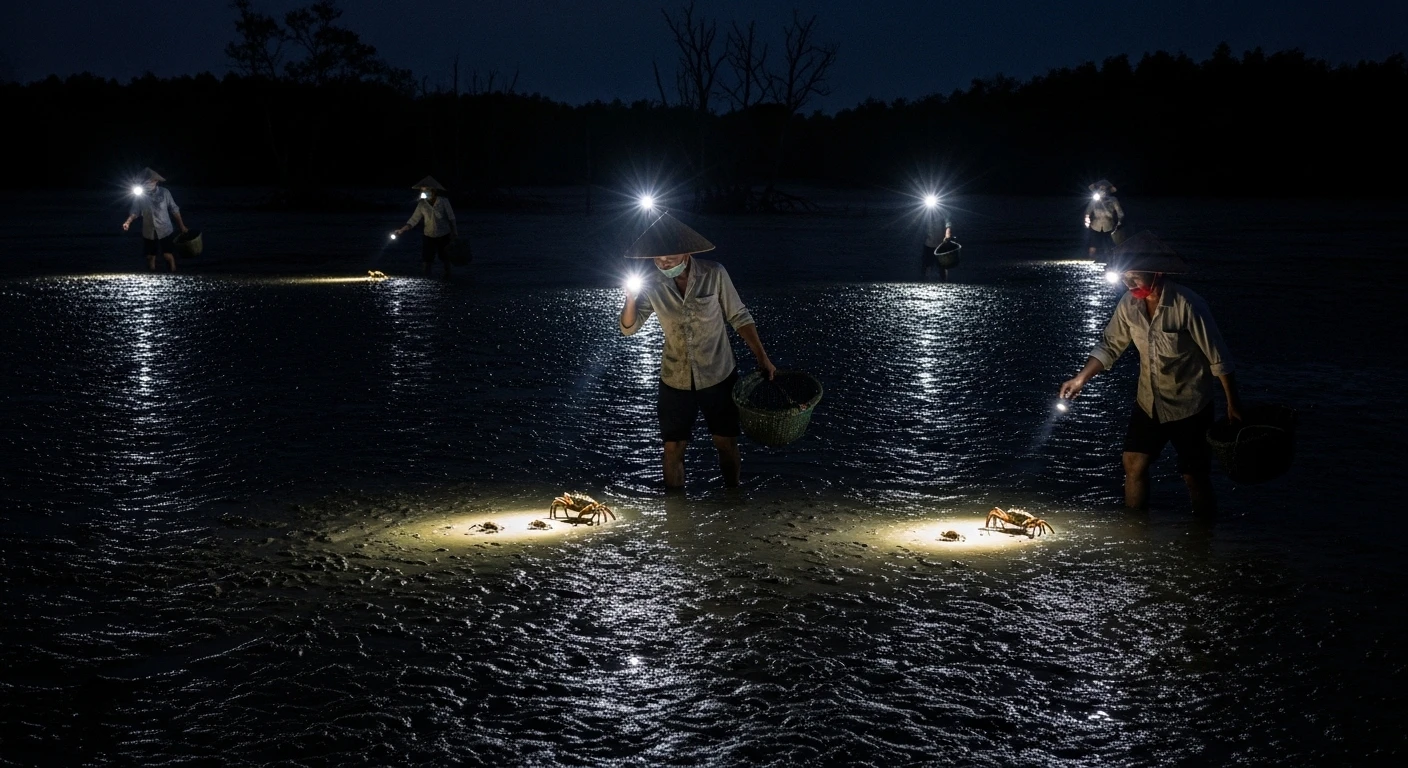
📸 Flashlights pierce the darkness, illuminating the nightly ballet of the Ba Khia harvest.
1 Meet the Ba Khia: Tiny Warriors of the Mud
In the labyrinthine waterways of the Mekong Delta, especially in coastal provinces like Ca Mau and Ben Tre, a peculiar crustacean reigns supreme during a specific season: the Ba Khia. These aren't your giant mud crabs destined for elaborate seafood platters. Ba Khia are small, often no bigger than your thumb, and fiercely territorial inhabitants of the mangrove mudflats.
Their magic lies in their sheer numbers and the unique cultural phenomenon that surrounds their capture. From roughly October to December, when the monsoon rains begin to subside and the tides become more predictable, the Ba Khia emerge from their muddy burrows in a frenzy. This is the signal for the local communities, who have honed generations of knowledge to coincide with this natural event.
To the uninitiated, the idea of wading through ankle-deep, silty mangrove mud under the cloak of night might seem… well, unpleasant. But for the people of the Delta, it's an integral part of their livelihood and a cherished tradition. The Ba Khia harvest is more than just fishing; it's a community affair, a testament to resilience, and a direct connection to the bounty of their unique environment.
2 Ca Mau: Where the Mangroves Meet the Sea
Ca Mau, Vietnam's southernmost province, is a vast expanse of brackish water, intricate canal systems, and sprawling mangrove forests. It's a landscape shaped by the ebb and flow of tides, where the Mekong River's freshwater meets the salty embrace of the Gulf of Thailand. This unique geography makes it a prime habitat for a diverse range of seafood, including the elusive Ba Khia.
The people of Ca Mau are intimately tied to the rhythm of the tides and the seasons. For them, Ba Khia aren't just food; they represent a critical period of income and sustenance. The harvesting season is a well-orchestrated, albeit rustic, operation that draws families and neighbors together. It's a shared effort, born out of necessity and nurtured by tradition.
This intimate relationship between the people and the environment is palpable. As you venture into the mangroves at night, you witness a profound respect for nature's cycles. The flickering beams of flashlights cutting through the inky darkness, the quiet determination of the harvesters, the gentle lapping of water against the muddy banks – it all speaks to a life lived in harmony with the Delta's wild heart.
3 Into the Mud: A Night with the Lanterns
The experience begins as dusk settles. Locals, often in small groups, prepare their gear: a sturdy net, a sharp knife or a small spade, and crucially, a powerful flashlight or a headlamp. They navigate their small, flat-bottomed boats – essential for traversing the shallow, muddy terrain – towards the prime Ba Khia grounds. The air is thick with the scent of salt, damp earth, and the faint, sweet perfume of mangrove blossoms.
As darkness fully descends, the real work begins. The tide has receded, exposing vast swathes of glistening mud that were submerged just hours before. The harvesters fan out, their flashlight beams dancing across the muck. The goal: to spot the tell-tale movement of a Ba Khia, often just a subtle disturbance in the mud or the glint of an eye.
With practiced agility, they either scoop up the crabs with their nets or carefully dig them out from their shallow burrows. It’s a painstaking process, requiring sharp eyesight and a keen sense of where these small creatures might be hiding. The rhythm of the night is punctuated by the gentle splashes, hushed calls, and the focused beams of light. It's a primal dance between hunter and prey, conducted under the watchful eye of the moon.
4 Beyond Sustenance: A Community Event
The Ba Khia harvest is deeply ingrained in the social fabric of the Mekong Delta. It's not just about individual gain; it’s a collective endeavor. Families work together, with older generations passing down their techniques to the younger ones. The camaraderie and shared purpose are as vital as the crabs themselves.
Many of these small crabs are consumed fresh, often transformed into simple yet incredibly flavorful dishes. But a significant portion is preserved. Ba Khia are renowned for their unique culinary transformation when fermented, creating a pungent, salty, and intensely savory delicacy that’s a hallmark of the region's rustic cuisine.
The seasonal nature of this harvest also dictates a specific period of culinary focus. During Ba Khia season, local markets brim with these tiny crabs, and households buzz with the preparation of Ba Khia-centric meals. It’s a culinary calendar marked by the moon and the tides, a vibrant pulse within the broader gastronomic landscape of Vietnam.
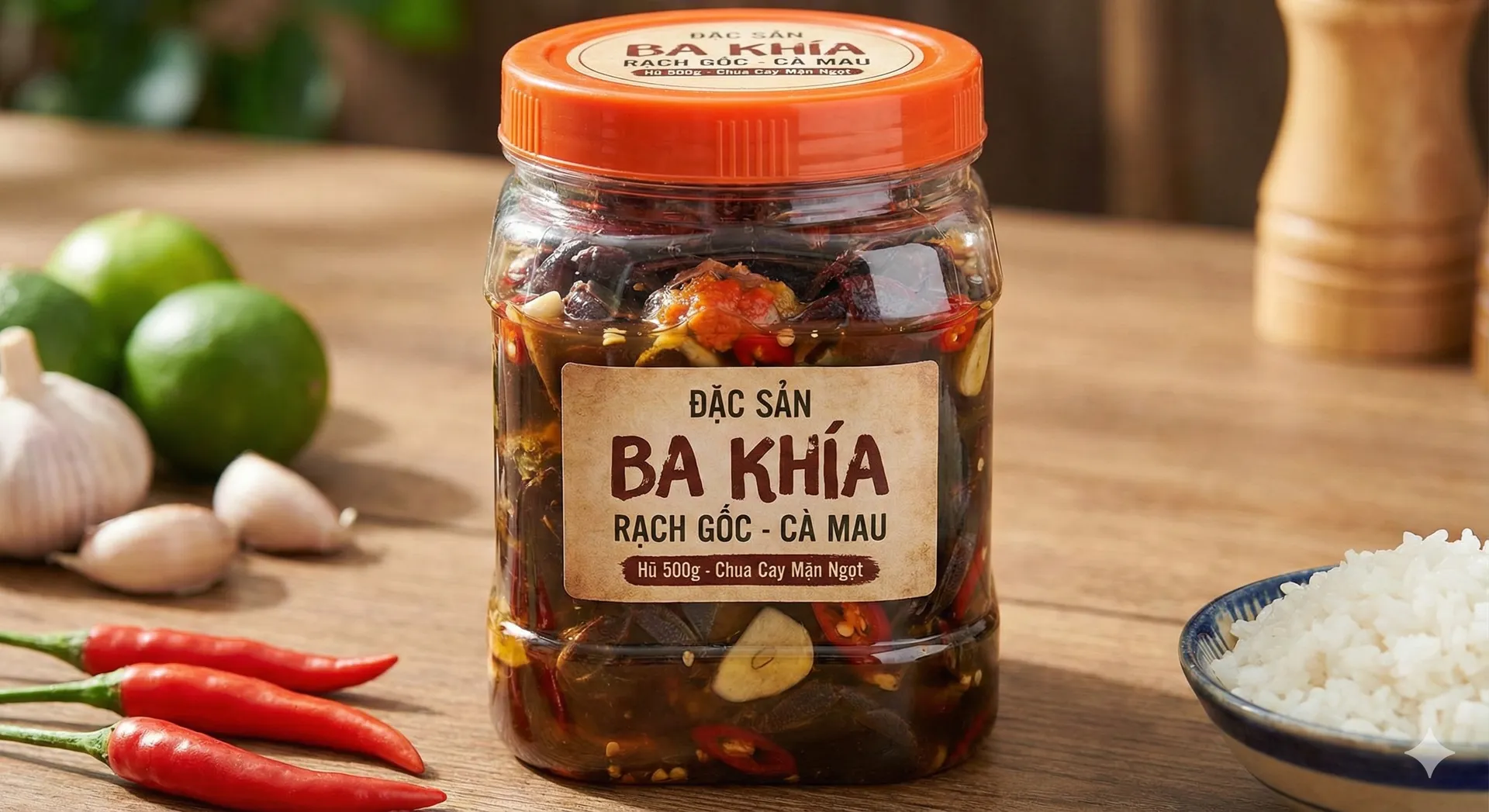
Heritage Ingredient
Fermented Mangrove Crab (Ba Khia)
Fermented Mangrove Crab (Ba Khia)
A traditional fermented crab specialty from the mangrove region of Rach Goc, often cited in articles about rustic Mekong Delta flavors and preserved seafood culture.
The salty-sour heartbeat of the wild south, where traditional fermentation turns forest crabs into a nostalgic explosion of rustic Mekong soul.
This fermented Ba Khia, often prepared with garlic, chili, and a touch of sugar, is a powerful example of how the Mekong Delta utilizes every available resource. Its assertive flavor profile is not for the faint of heart, but for those who embrace it, it’s an unforgettable taste of the Delta's soul.
5 Simple Tools, Profound Skill
The equipment used for Ba Khia harvesting is as straightforward as the process itself, yet mastery of these simple tools is what separates a casual observer from a seasoned harvester.
- Flashlights/Headlamps: Essential for navigating the dark and spotting the crabs. Bright, focused beams are crucial for discerning movement in the mud.
- Nets: Often small, fine-meshed nets on long handles. These are used to scoop up crabs or to carefully trap them as they are dislodged from their hiding spots.
- Spades/Knives: Small, sturdy tools for digging into the mud to extract crabs from their burrows. The technique involves sensing the crab's presence before disturbing its home too much.
- Boats: Flat-bottomed skiffs or sampans are indispensable for reaching the harvesting grounds, as they can navigate the shallowest waters and muddy channels.
- Collection Baskets/Buckets: For gathering the day's catch.
It's a skill that combines observation, patience, and a deep understanding of the mangrove ecosystem. The harvesters don't just blindly dig; they interpret the subtle signs of the environment – the water level, the texture of the mud, the faint sounds – to locate their quarry.
6 How to Enjoy Ba Khia
While the fermented version is famous, fresh Ba Khia also holds a special place. They are often steamed or boiled and then stir-fried with ingredients that amplify their natural flavor.
A common preparation involves stir-frying them with garlic, chili, and a splash of fish sauce, creating a dish that is simultaneously savory, spicy, and intensely briny. The small size means they are often eaten whole, shell and all, providing a satisfying crunch and a burst of flavor that is uniquely of the sea and the mud.
Another popular dish is Ba Khia Rang Muoi (Salt and Pepper Ba Khia). The crabs are coated in a mixture of salt, pepper, and sometimes a hint of MSG or sugar, then fried until crispy. The resulting snack is addictive, a perfect accompaniment to a cold beer on a hot Delta evening.
The taste is distinct: a concentrated essence of the mangrove environment. It's less about the sweet, delicate meat of larger crabs and more about a bold, salty, earthy flavor that reflects the very mud from which they came. It’s a taste that grounds you, reminding you of the raw, untamed nature of the Mekong Delta.
7 Experiencing the Harvest (Responsibly)
For the adventurous traveler, witnessing or even participating in the Ba Khia harvest can be an unforgettable experience. If you plan to visit during the season:
- Best Time: October to December, coinciding with the receding tides after the rainy season.
- Location: Focus on coastal areas of Ca Mau, Ben Tre, or Soc Trang provinces.
- Connect with Locals: The best way to experience this is through local guides or homestays. They can arrange for you to join a harvesting trip.
- Be Prepared: This is not a luxury tour. You will be wading in mud, possibly at night. Wear old clothes and sturdy, waterproof footwear.
- Respect the Environment: The mangroves are a fragile ecosystem. Follow your guide's instructions and leave no trace.
- Embrace the Culture: Be open to the rustic nature of the experience. The reward is a genuine insight into Delta life.
This is not a tourist attraction manufactured for visitors; it is a genuine, centuries-old way of life. Approaching it with respect and curiosity will yield the most authentic and rewarding experience.
8 A Taste of Resilience
The Ba Khia harvest season is more than just a foraging expedition; it's a powerful symbol of the Mekong Delta's enduring spirit. It highlights the resourcefulness of its people, their deep connection to the land and water, and their ability to find sustenance and community even in the most challenging environments.
As the flashlights sweep across the dark mudflats, they illuminate not just tiny crabs, but a tradition that has sustained generations. It's a reminder that the most profound culinary experiences often come from the simplest sources, harvested with skill, respect, and a deep understanding of the natural world. The Ba Khia, in their humble way, embody the very essence of the Mekong Delta – wild, resilient, and utterly unforgettable.