" Forget the dusty image of traditional fishing villages. The Mekong Delta, a region synonymous with natural bounty, is rapidly embracing a technological revolution, and its crabs are the prime beneficiaries. "
1 Where Tradition Meets Tomorrow: The Mekong's Crab Legacy
For generations, the labyrinthine waterways and fertile coastal regions of Vietnam's Mekong Delta have been the lifeblood of its communities. Among its most prized treasures are the mud crabs, particularly those from the southern tip of Ca Mau province, renowned for their succulent meat and rich roe.
These crabs are more than just a commodity; they are woven into the fabric of local culture, a symbol of the delta's abundant biodiversity and the resilience of its people. Traditional farming methods, often passed down through families, involve extensive, semi-intensive, or extensive pond systems that mimic natural mangrove habitats.
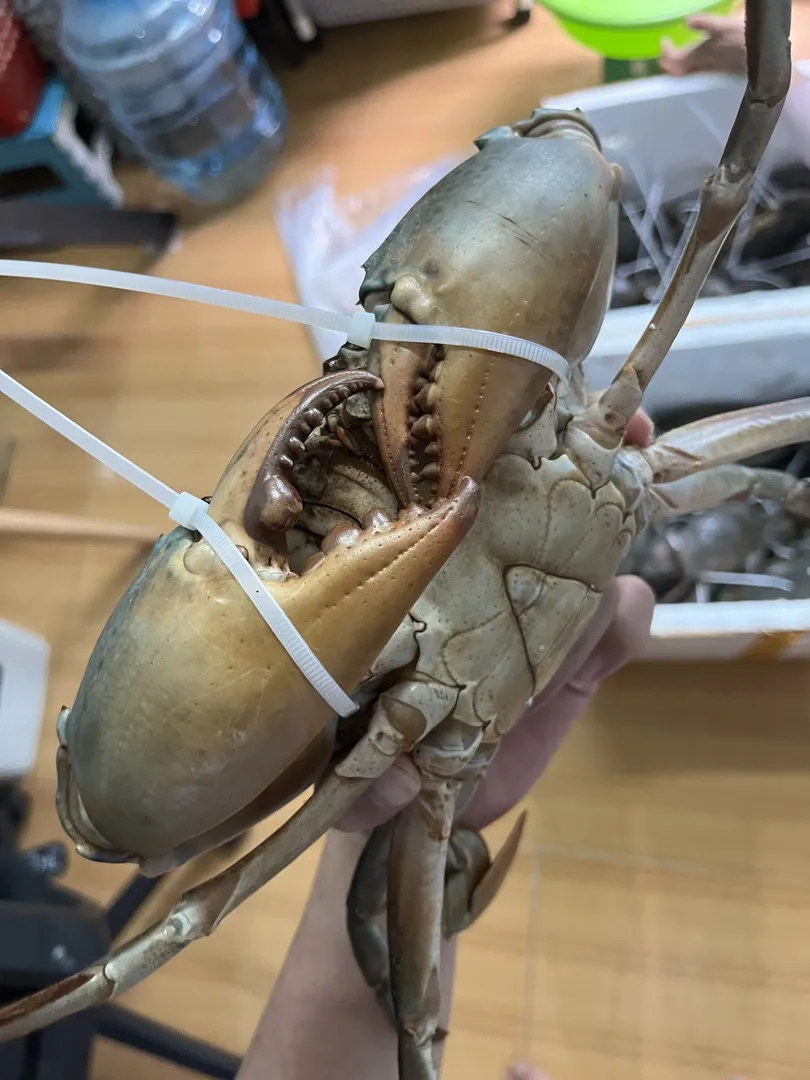
Heritage Ingredient
Ca Mau Jumbo Mud Crab
Ca Mau Jumbo Mud Crab
A large male mud crab prized for dense, sweet meat and thick claws, commonly used in steamed crab and grilled crab dishes across the Mekong Delta.
An icon of coastal culinary heritage, featuring firm, sweet meat that captures the raw power and freshness of Ca Mau's tides.
However, the natural world is unpredictable. Factors like disease outbreaks, water quality fluctuations, and the inherent challenges of manual monitoring have historically kept crab survival rates from reaching their full potential, often hovering in the 60-70% range. For an export-driven industry striving for global standards, this was a significant hurdle.
2 The Innovation Engine: Startups Driving Change
Enter the new wave of Vietnamese entrepreneurs. These tech-savvy minds, often with roots in the very regions they seek to transform, are not content with the status quo. They see the immense potential in marrying Vietnam's rich agricultural heritage with cutting-edge technology.
These local startups are at the forefront, developing and deploying intelligent systems designed to optimize every stage of the crab farming lifecycle. Their focus? Precision, efficiency, and, most importantly, a dramatic increase in survival rates and product quality to meet stringent international export demands.
3 The Digital Eye: AI for Real-time Insights
Artificial intelligence is revolutionizing how farmers understand their aquatic farms. Sophisticated sensors, deployed across ponds and tanks, gather a constant stream of data:
- Water Quality Parameters: Temperature, pH, dissolved oxygen, salinity, and ammonia levels are monitored continuously. AI algorithms analyze these data points to predict potential issues like disease outbreaks or harmful algal blooms before they become critical.
- Crab Behavior Analysis: Underwater cameras, powered by machine learning, can track crab movement, feeding patterns, and social interactions. Deviations from normal behavior can signal stress, illness, or overcrowding, allowing for immediate intervention.
- Growth Prediction: By analyzing growth rates from historical data and current conditions, AI can help farmers forecast harvest times more accurately, ensuring they meet contract deadlines and optimize market timing.
This proactive approach, driven by data, allows farmers to move from reactive problem-solving to predictive management, significantly reducing losses.
4 Robotic Arms: Precision Feeding & Health Checks
Complementing the AI's insights are the emerging robotic systems. These aren't the humanoid robots of science fiction, but specialized automated units designed for repetitive, labor-intensive, and precision-critical tasks.
Automated Feeding Systems: Robotic arms equipped with sensors can dispense feed precisely where and when it's needed, based on AI analysis of crab activity and nutritional requirements. This minimizes waste, ensures optimal growth, and prevents overfeeding, which can degrade water quality.
Health Monitoring & Sorting: More advanced systems are being developed for non-invasive health checks. Robotic arms, guided by AI vision systems, can identify individual crabs showing signs of distress or disease, and in some cases, gently sort them for separate treatment or observation. This level of individual care was simply impossible with manual methods on a large scale.
5 A Triumph of Technology: Reaching New Heights
The synergy between AI-driven analytics and robotic precision is yielding remarkable results. Several pioneering startups have reported achieving and sustaining crab survival rates of an unprecedented 95%.
This leap forward is transformative:
- Economic Viability: Higher survival means significantly reduced losses, making crab farming a more profitable and sustainable venture for farmers.
- Export Standards: Meeting stringent international quality and safety standards becomes more achievable when consistent health and growth are guaranteed. This opens doors to premium global markets.
- Sustainability: Optimized feeding and reduced disease impact contribute to a more environmentally friendly aquaculture model, crucial for the delicate Mekong Delta ecosystem.
- Reduced Human Error: Automation minimizes inconsistencies and errors inherent in manual labor, leading to a more predictable and reliable output.
6 Beyond the Crab: A Blueprint for Mekong's Agri-Future
The success in crab farming is not an isolated incident. It serves as a powerful case study for the broader agricultural sector in the Mekong Delta and Vietnam.
Technologies developed for crab aquaculture – AI for water quality monitoring, predictive analytics for disease, and robotic systems for precision tasks – can be adapted for shrimp farming, fish cultivation, and even rice production. This wave of agri-tech is poised to:
- Empower Farmers: Providing them with sophisticated tools to manage their farms more effectively and economically.
- Enhance Food Security: By ensuring stable and increased yields of high-quality produce.
- Boost Vietnam's Export Prowess: Solidifying its position as a global leader in sustainable aquaculture and agriculture.
- Protect the Environment: By promoting more resource-efficient and less polluting farming practices, safeguarding the unique ecosystems of the Mekong.
7 Navigating the Path Forward
While the future looks bright, challenges remain. The initial investment in advanced technology can be significant, and ensuring widespread adoption requires accessible financing, training programs, and robust technical support for farmers across the delta.
Furthermore, maintaining the delicate balance between technological advancement and preserving the ecological integrity of the Mekong Delta is paramount. The goal is smart, sustainable farming, not industrial intensification that could harm the very environment that sustains it.
However, the momentum is undeniable. Vietnamese ingenuity, coupled with global technological advancements, is creating a new paradigm for aquaculture. The success in crab farming is a testament to what can be achieved when innovation is applied with purpose and respect for nature.
8 A Glimpse into Your Next Sustainable Seafood Plate
As consumers, we are increasingly aware of where our food comes from and how it's produced. The next time you enjoy a premium crab dish, whether it's a delicate steamed preparation or a rich, saucy creation, know that it might very well be a product of this technological revolution.
The 95% survival rates achieved through AI and robotics don't just represent higher yields; they represent a commitment to quality, sustainability, and a future where iconic seafood delicacies are not only abundant but also farmed with the intelligence and care the Mekong Delta deserves.